The best energy-efficient window fans can improve airflow and reduce reliance on air conditioning during mild weather. Reversible airflow, programmable controls, and quiet operation make them useful for bedrooms, kitchens, and living spaces.
We compared 10 popular models across cooling performance, ventilation flexibility, controls, fit, noise, and everyday efficiency to help you choose the right fan for your windows and climate.
Best 10 Energy Efficient Window Fans Picks for 2026
Best Smart-Controlled Pick
Bionaire Reversible Window Fan

- Programmable thermostat with LED display
- Intake, exhaust, and exchange airflow modes
- Remote control and 24–36-inch window fit
Best For: Rooms needing automatic temperature-based operation
Best Budget Basic Pick

- 68-watt twin-fan design
- Reversible intake and exhaust airflow
- Expandable fit for 25–32-inch windows
Best For: Simple manual cooling in bedrooms and small to medium rooms
Best Low-Wattage Twin Fan
BLACK+DECKER 9-Inch Window Fan

- 56-watt dual-fan design
- Manual two-speed operation
- Fits 22.5–33-inch windows
Best For: Low-power intake or exhaust airflow in common household rooms
Best High-Airflow Thermostat Pick
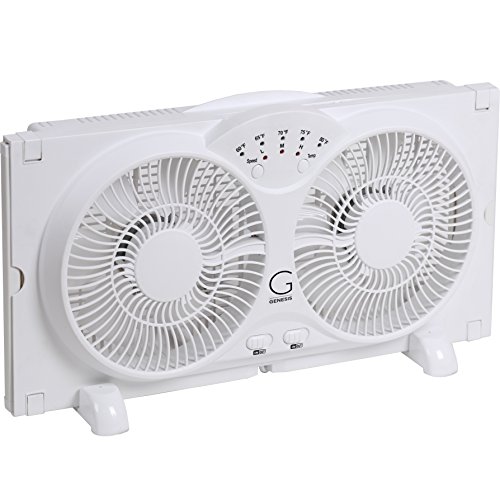
- 30-watt rating with 706.21 CFM listed airflow
- 60–80-degree thermostat with LED indicators
- Three speeds and reversible airflow
Best For: Rooms needing strong stated airflow with thermostat control
Best Overall
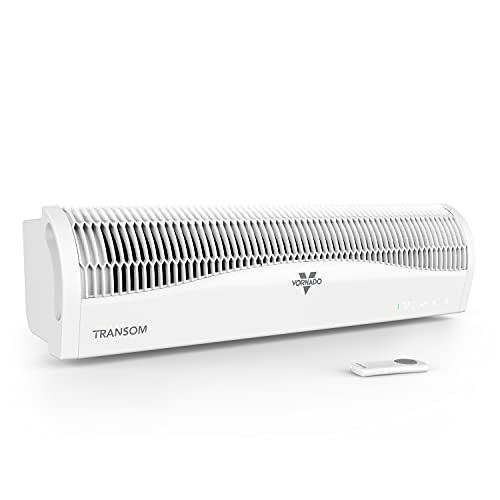
- 25-watt motor with four speeds
- Electronic intake and exhaust reversal
- Fits 26–40-inch horizontal windows
Best For: Whole-room circulation and flexible ventilation
Best for Timed Operation
BEYOND BREEZE 9-Inch Window Fan

- Three cooling and ventilation modes
- Eight-hour timer with auto shutoff
- Adjustable 23.5–37-inch window fit
Best For: Scheduled cooling in bedrooms and home offices
Best for Airflow Direction

- Three directional airflow settings
- Four speeds with reversible exhaust
- Fits windows up to 40 inches
Best For: Broad, customizable airflow across larger rooms
Best with Extra Features

- Thermostat supports automatic on/off control
- Three airflow modes with remote operation
- 23.5–37-inch expandable fit and foam seal included
Best For: Rooms needing flexible ventilation and temperature control
Lowest-Wattage Pick

- 31-watt listed power rating
- Reversible intake and exhaust operation
- Quiet 45 dB operation with three speeds
Best For: Lower-power ventilation in compatible horizontal windows
Best Simple Value
EZ-CHILL 9-Inch Twin Window Fan

- Manual intake and exhaust modes
- Auto-locking 22.5–34-inch expanders
- Portable tabletop design with two speeds
Best For: Simple, portable cooling and ventilation
Best Smart-Controlled Pick – Bionaire Reversible Window Fan
For shoppers comparing energy efficient window fans, the Bionaire stands out for its programmable thermostat and reversible airflow. It can draw in fresh air, exhaust warm air, or exchange airflow while using three speed settings for more control.
Best For: Bedrooms, home offices, and living spaces where automatic temperature control and remote operation are useful.
Pros:
- Programmable thermostat can turn the fan on and off based on the selected temperature.
- Reversible airflow supports intake, exhaust, or simultaneous air exchange.
- Remote control, LED temperature display, and dimmer function add convenience.
- Fits 24–36-inch windows with built-in and additional extender panels.
Cons:
- At 120 watts, it uses more power than the lower-wattage models in this roundup.
- Its electronic features may be more than needed for simple manual cooling.
The thermostat and airflow options make this a versatile choice when you want cooling to run more selectively. It is also ready to install without assembly and includes a three-year limited warranty.
Best Budget Basic Pick – Amazon Basics Twin Window Fan
The Amazon Basics twin fan is a straightforward option for shoppers seeking energy efficient window fans without complex controls. Its 68-watt motor, two speeds, and reversible positioning cover basic intake and exhaust needs in small to medium rooms.
Best For: Bedrooms and standard windows where simple manual airflow control matters most.
Pros:
- Uses 68 watts and offers two simple speed settings.
- Can be reversed in the window for exhaust operation.
- Expandable side panels fit windows from 25 to 32 inches wide.
- Copper motor is designed for consistent operation.
Cons:
- Manual controls provide fewer convenience features than thermostat-equipped models.
- It has only two speeds.
- The supplied notes do not specify a remote control or automatic temperature control.
This model keeps operation uncomplicated and offers a practical balance of airflow flexibility and moderate power use. Its adjustable width makes it suitable for many standard windows, provided the opening falls within its range.
Best Low-Wattage Twin Fan – BLACK+DECKER 9-Inch Window Fan
With a listed 56-watt rating, the BLACK+DECKER dual fan is a compelling choice among energy efficient window fans for basic air circulation. Its two mechanical speed settings and reversible placement let you choose between drawing in fresh air and exhausting room air.
Best For: Bedrooms, kitchens, bathrooms, and living areas needing a compact, low-wattage window fan.
Pros:
- 56-watt design supports lower-power operation.
- Two 9-inch fan heads provide dual airflow.
- Reversible installation allows intake or exhaust use.
- Accordion expanders and removable legs accommodate 22.5–33-inch windows.
Cons:
- Only two manually controlled speeds are available.
- It lacks a programmable thermostat and remote control.
- Its one-year limited warranty is shorter than the Bionaire’s listed warranty.
This fan prioritizes uncomplicated operation, flexible installation, and modest power consumption. The rust-resistant construction and removable legs add practical versatility, though temperature automation is not part of the design.
Best High-Airflow Thermostat Pick – Genesis Twin Window Fan
The Genesis Twin Fan combines a three-speed control with a built-in thermostat and reversible airflow, making it a strong contender among energy efficient window fans. Its listed 30-watt rating and 706.21 CFM airflow capacity appeal to shoppers who want substantial circulation with automatic temperature monitoring.
Best For: Bedrooms and rooms where high stated airflow, thermostat control, and intake or exhaust flexibility are priorities.
Pros:
- Listed at 30 watts with a stated airflow capacity of 706.21 CFM.
- Three speed settings provide more adjustment than two-speed models.
- Built-in thermostat ranges from 60 to 80 degrees and uses LED indicators.
- Dual expandable side panels add 6.5 inches on either side for window fitting.
Cons:
- Controls are button-based rather than remote-operated.
- The supplied notes identify brushed motors, while some competing models list brushless motors.
- At 8.4 pounds, it is heavier than the other listed twin-fan options.
This model offers an appealing mix of low listed wattage, thermostat functionality, and flexible reversible airflow. Confirm the window dimensions before buying, since the supplied overall width is 24 inches with expandable side panels.
Best Overall – Vornado TRANSOM Window Fan
For shoppers comparing energy efficient window fans, the Vornado TRANSOM combines adjustable airflow, electronic exhaust reversal, and automatic temperature control in a low-profile design. Its 25-watt rating, four speeds, and weather-resistant case make it a strong option for regular cooling and ventilation.
Best For: Whole-room circulation and flexible intake or exhaust ventilation in larger horizontal windows.
Pros:
- Four speed settings with remote and touchpad controls.
- Electronically switches between intake and exhaust modes.
- Fits single- or double-hung windows 26–40 inches wide.
- Low-profile, weather-resistant design with a 185 CFM airflow capacity.
Cons:
- Installation is limited to horizontal positioning.
- Window screen removal may be necessary depending on window depth.
- Requires a window opening at least 8 inches tall.
The TRANSOM is a well-rounded choice when you want efficient power use without giving up remote control, reversible airflow, or whole-room circulation. Confirm your window dimensions and screen clearance before buying.
Best for Timed Operation – BEYOND BREEZE 9-Inch Window Fan
The BEYOND BREEZE is one of the more convenient energy efficient window fans for scheduled cooling. Its three operating modes, remote control, and up-to-eight-hour auto-shutoff timer let you ventilate a room while limiting unnecessary runtime.
Best For: Bedrooms and home offices where quiet operation, overnight use, and automatic shutoff are priorities.
Pros:
- Three modes: cool, exhaust, and circulate.
- Eight-hour timer helps reduce unnecessary operation.
- Adjustable fit expands from 23.5 to 37 inches.
- Removable, washable bug screen helps block bugs, dust, and debris.
Cons:
- Uses 50 watts, higher than some comparable models.
- Offers three speed levels rather than four.
- Its supplied dimensions list a 25-inch depth, so installation space should be checked carefully.
The timer is the main efficiency feature here, particularly for overnight cooling or pre-cooling a room before you return. Measure your window and confirm available depth before installation.
Best for Airflow Direction – EVO Window Fan Air Circulator
The EVO Window Fan stands out among energy efficient window fans for its multi-directional airflow and automatic oscillation. Four speed levels, an electronically reversible exhaust mode, and a timer give you several ways to manage cooling and ventilation while preserving your exterior view.
Best For: Rooms needing broad, adjustable airflow, including bedrooms, kitchens, living rooms, and home offices.
Pros:
- Three directional airflow settings help customize cooling.
- Four speeds, remote control, touch controls, and an adjustable timer.
- Fits windows up to 40 inches wide with adjustable side panels.
- Includes automatic oscillation, a washable pre-filter, and a bug screen.
Cons:
- The supplied specifications do not state a wattage rating.
- At 9.05 inches deep, it may require more clearance than some low-profile fans.
- The product notes describe it for indoor use only.
If directing air evenly across a room matters more than a published power rating, the EVO offers a versatile feature set. Its adjustable panels and low-profile design still require a careful window and clearance check.
Best with Extra Features – SHINIC Twin Window Fan
The SHINIC Twin Window Fan is a flexible choice for shoppers comparing energy efficient window fans. Its thermostat can turn the fan on or off to help maintain a selected temperature, while three operating modes support cooling, exhaust, and air exchange.
Best For: Bedrooms and other rooms where automatic temperature control, remote operation, and flexible airflow are priorities.
Pros:
- Three modes provide intake, exhaust, or air-exchange operation.
- Programmable 60°F–85°F thermostat can turn the fan on or off automatically.
- Adjustable 23.5- to 37-inch width fits many window configurations.
- Includes remote control and foam sealing tape to help reduce air leaks.
Cons:
- At 80 watts, it uses more listed power than the 31-watt Vornado option.
- Its side panels and controls may be more setup than a basic manual fan.
Choose this model when convenience and temperature-based control matter more than minimizing rated wattage. The thermostat, remote, and included sealing strip give it a well-rounded feature set for regular home use.
Lowest-Wattage Pick – Vornado PROFILE Window Fan
With a listed 31-watt rating, the Vornado PROFILE Window Fan is a strong candidate for shoppers seeking energy efficient window fans with lower power consumption. It combines reversible intake and exhaust with three speeds and a low-profile window-mounted design.
Best For: Bedrooms, kitchens, and home offices where lower listed wattage, quiet operation, and straightforward controls are important.
Pros:
- 31-watt listed rating is the lowest among these three products.
- Reversible airflow switches between intake and exhaust with a button press.
- Three speeds and a listed 45 dB noise level support quieter use.
- Modular blocks fit windows from 26 to 38 inches wide.
Cons:
- It installs only horizontally and may require screen removal.
- Fits single-hung and double-hung windows with an opening of at least 8 inches tall.
- It lacks the thermostat and remote control included with the SHINIC model.
The Vornado is the clearest fit when rated wattage and quiet operation are the deciding factors. Confirm the window dimensions and installation orientation before buying, since its fit requirements are more specific.
Best Simple Value – EZ-CHILL 9-Inch Twin Window Fan
The EZ-CHILL 9-Inch Twin Window Fan keeps operation simple with two speeds and manually reversible airflow. For shoppers comparing energy efficient window fans, its 45.9-watt listed rating, portable design, and auto-locking expanders offer a practical balance of power use and convenience.
Best For: Buyers who want a straightforward, portable window fan for cooling, exhaust, or ventilation without electronic controls.
Pros:
- Manual reverse function supports both intake and exhaust.
- Auto-locking expanders fit window openings from 22.5 to 34 inches.
- Two speeds provide a gentle or stronger airflow setting.
- Feet and a carrying handle allow tabletop use and room-to-room portability.
Cons:
- Only two speed settings are provided.
- Airflow direction must be changed manually rather than by remote control.
- Its 45.9-watt rating is higher than the Vornado’s listed 31 watts.
This EZ-CHILL model makes sense for shoppers who value uncomplicated controls and portability. It offers useful reversible ventilation without the thermostat or electronic features found on more feature-rich alternatives.
How We Picked the Best Energy Efficient Window Fans
We focused on features that affect practical energy use and comfort rather than treating maximum airflow as the only measure of performance. Each model was evaluated for speed controls, reversible intake and exhaust operation, thermostat or timer functions, window compatibility, noise-conscious design, and ease of use.
We also considered useful extras such as remote controls, LED displays, bug screens, weather-resistant housings, expandable panels, and low-profile designs. A fan that fits securely and lets you control when it runs can deliver more useful ventilation than a powerful model that is difficult to install or operate.
Quick Comparison
| Feature | What to look for |
|---|---|
| Airflow | Multiple speeds and reversible intake or exhaust settings |
| Controls | Thermostat, timer, remote, or clearly labeled manual controls |
| Fit | Expandable panels or a stated width range matching your window |
| Noise | Low-speed or quiet-operation settings for bedrooms and offices |
| Protection | Stable installation, weather-resistant construction, or a bug screen |
Key Buying Factors for Energy-Efficient Window Fans
Reversible Airflow and Fan Configuration
Choose a reversible model if you want to draw cool outdoor air inside at one time and exhaust warm, stale air later. Twin-fan designs may allow both functions simultaneously or independently, while manually reversible models require changing the airflow direction yourself.
Window Size and Installation
Measure the opening, not just the glass, before buying. Expandable side panels help accommodate different widths, but the fan must still sit securely without gaps. A tight fit improves comfort, limits outdoor dust and insects, and reduces rattling.
Controls, Thermostats, and Timers
A thermostat can cycle the fan as the room reaches a selected temperature, while a timer prevents unnecessary overnight or daytime operation. Remote controls and LED displays are especially useful when the fan is installed in a bedroom or high window.
Noise and Everyday Efficiency
Look for several speed settings so you can use lower airflow when maximum cooling is unnecessary. Quiet operation matters in sleeping areas, and efficient control features can reduce run time more effectively than simply choosing the highest-rated speed.
Who Should Buy Which Energy Efficient Window Fans?
- For flexible whole-room ventilation: Choose a model with reversible airflow, several speeds, and a remote or thermostat.
- For bedrooms: Prioritize quiet operation, low-speed control, a timer, and remote access.
- For changing window sizes: Look for wide adjustable panels and confirm the listed fit range.
- For kitchens or humid spaces: An exhaust setting helps remove warm air, odors, and lingering moisture.
- For insect-prone areas: A built-in bug screen and a secure, gap-free installation are valuable.
- For simple, budget-conscious cooling: A basic two-speed twin fan may be enough if you do not need thermostatic or remote controls.
Before purchasing, confirm the exact window dimensions, outlet location, control style, and whether the unit is designed to remain installed during rain. The most efficient choice is the one you can operate precisely and use safely throughout the season.