If you’re shopping for a robot vacuum for allergies, the biggest wins come from sealed filtration, strong suction, and a base that keeps dust contained between cleanings.
Our picks focus on models that help reduce everyday allergens on hard floors and carpets while staying easy to maintain for busy homes.
Best 10 Robot Vacuum for Allergies Picks for 2026
Allergy-Focused HEPA Pick
Shark AV2501AE AI Robot Vacuum with XL HEPA Self-Empty Base

- True HEPA filtration traps 99.97% of dust and allergens
- 60-day bagless self-empty base reduces manual emptying
- LiDAR mapping and Matrix Clean improve whole-home coverage
Best For: Homes that want strong allergen capture with long self-emptying convenience
Strong Suction Value Pick
ILIFE A30s Robot Vacuum, 10000Pa Max Suction
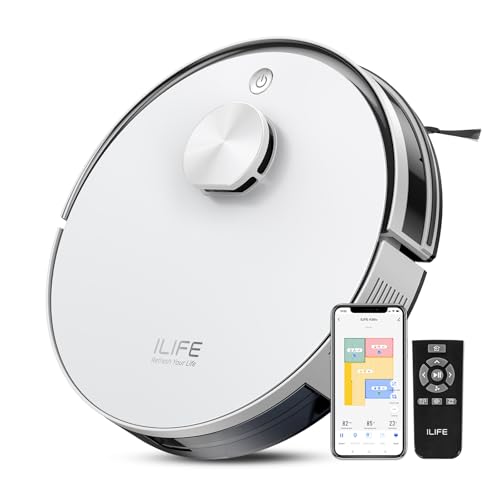
- Up to 10,000Pa suction helps lift dust and pet hair
- LiDAR mapping and app controls improve routing
- Dual anti-tangle brush reduces hair wrap
Best For: Homes that want strong pickup and smart mapping without premium pricing
Compact HEPA Allergy Pick
Shark AV2501S AI Ultra Robot Vacuum

- True HEPA filtration traps 99.97% of dust and allergens
- 30-day self-empty base keeps upkeep low
- Matrix Clean and LiDAR help cover rooms thoroughly
Best For: Allergy-sensitive homes that want HEPA cleanup with a smaller base
Vacuum-Mop Versatility Pick
roborock Q7 L5 Robot Vacuum and Mop Combo

- 8,000Pa suction handles dust, hair, and debris
- Vacuum-and-mop combo adds hard-floor cleaning
- LiDAR mapping and no-go zones improve control
Best For: Homes that want a flexible vacuum-mop robot for dust and hard floors
Budget-Friendly Voice-Control Option
Shark ION Robot Vacuum, Tri-Brush System

- Tri-Brush System for carpets and hard floors
- 120-minute runtime for larger cleaning sessions
- Works with Alexa and Google Assistant
Best For: Simple, voice-controlled cleaning on a budget
Hands-Free Deep-Clean Pick
Robot Vacuum, 11500Pa Suction, LiDAR

- 11,500Pa suction with HEPA triple-stage filtration
- Self-emptying base with 90-day capacity
- LiDAR mapping for targeted room cleaning
Best For: Homes that want strong suction and low-touch dust disposal
Best Self-Emptying Mop Combo
roborock Q7 M5+ Robot Vacuum and Mop

- Sealed 2.7L dust bag for 7-9 weeks of use
- 10,000Pa suction with dual anti-tangle design
- LiDAR mapping with app-controlled routines
Best For: Low-maintenance vacuuming and mopping with strong dust containment
Top Pick for Deep-Suction Cleaning

- 70X power-lifting suction
- ClearView LiDAR mapping
- App, voice, and button control
Best For: Mixed-floor homes that want simple, mapped vacuuming
Best Heavy-Duty Pick

- 4L sealed dust bag with 99.9% allergen lock-in
- 20,000Pa suction for deep cleaning
- Vacuum and mop combo with anti-tangle design
Best For: Busy families wanting low-maintenance, all-in-one cleaning
Best for Large Homes

- 220-minute runtime for large areas
- Self-emptying base stores debris for 2-3 months
- 3-in-1 sweep, vacuum, and mop system
Best For: Large homes needing long runtime and hands-free upkeep
Allergy-Focused HEPA Pick – Shark AV2501AE AI Robot Vacuum with XL HEPA Self-Empty Base
If you’re shopping for a robot vacuum for allergies, this Shark model stands out for its true HEPA self-empty base and strong suction. It’s built to capture dust, dander, and other fine debris while its LiDAR mapping helps it clean methodically across carpet and hard floors.
Best For: Homes that need hands-off dust and allergen pickup with long self-emptying capacity.
Pros:
- True HEPA filtration captures and traps 99.97% of dust and allergens down to 0.3 microns.
- Bagless self-empty base holds up to 60 days of dirt and debris.
- Matrix Clean navigation and LiDAR help it cover the home more thoroughly.
- Self-cleaning brushroll and strong suction are well suited to pet hair and everyday dust.
Cons:
- Self-empty base is large, so it needs dedicated floor space.
- Higher-end feature set may be more than needed for smaller homes.
For allergy-focused cleaning, this Shark combines filtration, self-emptying convenience, and mapped coverage in one package. It’s a strong pick if you want a robot vacuum that can reduce how often you have to deal with dust and debris yourself.
Strong Suction Value Pick – ILIFE A30s Robot Vacuum, 10000Pa Max Suction
The ILIFE A30s is a practical robot vacuum for allergies if your main goal is pulling up dust, debris, and pet hair from floors without paying for a premium self-empty system. Its LiDAR mapping, strong suction, and anti-tangle brushes make it a capable cleaner for mixed hard floors and carpets.
Best For: Allergy-conscious households that want strong suction and simple app control.
Pros:
- Up to 10,000Pa suction is designed to lift dirt, debris, and pet hair from carpets and hard floors.
- LiDAR navigation and SLAM help it map efficiently and reduce missed spots.
- Dual anti-tangle brush is helpful in pet-heavy homes.
- App control supports no-go zones, virtual walls, and scheduled cleaning.
Cons:
- Uses a cartridge filter, not HEPA filtration.
- Vacuum-only design means no mopping option.
- 2.4GHz Wi-Fi only.
If filtration is your top priority, there are stronger allergy-specific options. But for buyers who mainly want high suction, mapping, and easy scheduling, the A30s delivers a compelling balance.
Compact HEPA Allergy Pick – Shark AV2501S AI Ultra Robot Vacuum
For shoppers seeking a robot vacuum for allergies, this Shark AI Ultra focuses on the features that matter most: HEPA filtration, self-emptying, and precise mapped cleaning. It’s aimed at picking up dust, dander, and pet hair from carpets and hard floors while keeping day-to-day maintenance low.
Best For: Allergy-sensitive homes that want HEPA filtration with a smaller self-emptying base.
Pros:
- True HEPA filtration captures and traps 99.97% of dust and allergens down to 0.3 microns.
- 30-day self-empty base cuts down on frequent bin emptying.
- Matrix Clean navigation helps it make multiple passes over problem areas.
- LiDAR home mapping and self-cleaning brushroll add to consistent cleaning performance.
Cons:
- Shorter self-empty capacity than the 60-day Shark version.
- Uses a foam filter in the listed details, so the product specs are less consistent than the main HEPA claim.
This model is a solid middle ground if you want the allergen-focused design of a Shark robot without stepping up to the larger-capacity base. It still gives you mapped cleaning and hands-free maintenance in a compact package.
Vacuum-Mop Versatility Pick – roborock Q7 L5 Robot Vacuum and Mop Combo
The roborock Q7 L5 is a versatile robot vacuum for allergies if you want dust pickup plus the option to mop hard floors. Its 8,000Pa suction, dual anti-tangle design, and LiDAR mapping help it clean floors efficiently, while the app gives you detailed control over where and how it runs.
Best For: Homes that want strong vacuuming plus mopping for fine dust on hard floors.
Pros:
- 8,000Pa suction lifts dust, hair, and debris from cracks and carpets.
- Dual anti-tangle brushes are designed to reduce hair wrap in pet homes.
- Vacuum-and-mop combo can handle fine dust and light wet cleaning at the same time.
- LiDAR navigation, multi-floor mapping, and no-go zones add flexible control.
Cons:
- Uses a washable filter, not HEPA filtration.
- Combo dustbin and water tank design may be less convenient for some users.
- Best suited to homes comfortable managing a mop module.
If you’re focused specifically on allergen capture, HEPA-based vacuums are stronger matches. But for households that want a mapped robot with both vacuuming and mopping, this Roborock is a capable all-rounder.
Budget-Friendly Voice-Control Option – Shark ION Robot Vacuum, Tri-Brush System
If you want a robot vacuum for allergies without spending on premium mapping or self-emptying features, the Shark ION AV753 is a straightforward pick for everyday floor cleanup. Its Tri-Brush System, multi-surface support, and voice control make it easy to run regularly on carpets and hard floors, which is the key habit for keeping dust from building up.
Best For: Homes that want simple, app-and-voice-controlled cleaning on a tighter budget.
Pros:
- Tri-Brush System helps pick up debris across carpets and hard floors.
- Works with Amazon Alexa and Google Assistant for voice control.
- 120-minute runtime supports whole-home cleaning in a single charge.
- Low-profile robotic form factor is made for indoor floor cleaning.
Cons:
- Uses a non-washable filter, so maintenance may be less convenient.
- Does not include self-emptying or advanced smart mapping.
- Capacity is modest at 0.45 quarts.
For allergy-focused cleaning, this model is best when you want frequent vacuuming and easy operation rather than advanced dust-management features. It covers the basics well, but shoppers who want more hands-off debris removal may want to compare it with newer self-emptying options.
Hands-Free Deep-Clean Pick – Robot Vacuum, 11500Pa Suction, LiDAR
For a robot vacuum for allergies, this D13S MAX stands out because it combines strong suction, self-emptying, and HEPA triple-stage filtration in one package. That mix is useful when you want to reduce how often you have to touch dust while still getting routine cleaning on carpets and hard floors.
Best For: Allergy-conscious homes that want maximum convenience and low-touch dust handling.
Pros:
- 11,500Pa suction is designed to lift embedded pet hair, crumbs, and debris.
- Self-emptying base with a 90-day dust bag reduces manual emptying.
- HEPA triple-stage filtration and multi-stage system are included.
- LiDAR mapping supports precise routes, no-go zones, and room-specific routines.
Cons:
- Noise level is listed at 70 dB, which may be noticeable in quiet homes.
- App and voice features depend on compatible devices and setup.
- Washable mop pad is included, but the focus is still mainly on floor cleaning automation.
This is the strongest fit if your priority is cutting down dust handling between cleanings. The self-emptying dock, sealed storage, and filtration system make it a practical choice for people who want a more hands-off routine.
Best Self-Emptying Mop Combo – roborock Q7 M5+ Robot Vacuum and Mop
If you want a robot vacuum for allergies that focuses on dust control and fewer maintenance steps, the roborock Q7 M5+ is a strong middle-ground option. Its sealed dust bag, 10,000Pa HyperForce suction, and dual anti-tangle design make it well suited for households that want reliable daily cleaning with less debris handling.
Best For: Homes that want a self-emptying robot vacuum and mop with strong suction and easy upkeep.
Pros:
- 2.7L sealed dust bag supports up to 7-9 weeks of hands-free cleaning.
- 10,000Pa suction helps pull pet hair and debris from carpets and hard floors.
- Dual anti-tangle design is helpful for reducing brush wrap and maintenance.
- LiDAR navigation, no-go zones, and app control add flexible scheduling.
Cons:
- App supports 2.4GHz Wi-Fi only.
- It uses a cartridge filter, not a HEPA filter.
- Self-emptying is convenient, but it is not fully maintenance-free.
This model is a practical choice if you want the cleaning benefits of vacuuming and mopping together while keeping dust contact to a minimum. It is especially appealing for users who value mapping accuracy and low-effort upkeep over premium filtration extras.
Top Pick for Deep-Suction Cleaning – iRobot Roomba 105 Vac
If you want a robot vacuum for allergies that focuses on simple, reliable floor pickup, the Roomba 105 Vac is built around strong suction and straightforward controls. Its 3-stage cleaning system, LiDAR mapping, and multi-surface brush are aimed at capturing dust, dirt, and debris from carpets and hard floors while cleaning in neat rows.
Best For: Homes that want easy-to-use, mapped cleaning with strong suction across mixed floors.
Pros:
- 70X power-lifting suction and a 3-stage cleaning system help pull up dust and dirt.
- ClearView LiDAR maps rooms for efficient coverage and obstacle avoidance.
- App, voice, and button control make daily use simple.
- Recharge-and-resume support helps finish larger cleaning jobs.
Cons:
- No self-emptying base, so you still need to empty the bin yourself.
- It vacuums only, so it is not a mop combo.
- 2.4 GHz Wi-Fi is required for setup and operation.
Overall, this is a practical pick if you want an allergy-focused robot vacuum with strong suction, smart mapping, and low-friction controls rather than a more complex maintenance station.
Best Heavy-Duty Pick – dreame D20 Air Plus
The dreame D20 Air Plus is a strong robot vacuum for allergies if you want sealed dust storage and heavy-duty pickup in one system. Its self-emptying dock, 20,000Pa suction, and anti-tangle brush design are built to reduce day-to-day maintenance while handling dust, pet hair, and debris on carpets and hard floors.
Best For: Busy homes that want self-emptying convenience plus vacuum-and-mop cleaning.
Pros:
- 4L sealed dust bag locks in 99.9% of allergens and can hold up to 120 days of debris.
- 20,000Pa suction is designed for deep carpet and hard-floor cleaning.
- Anti-tangle brush design helps manage hair-prone homes.
- Vacuum-and-mop function adds extra versatility for hard floors.
Cons:
- Only supports 2.4G Wi-Fi.
- The base is large and will take up more room than a simple dock.
- It may be more machine than needed if you only want basic vacuuming.
For allergy-minded buyers who want fewer dust-bin emptying sessions and more thorough cleaning, this model stands out for sealed storage, strong suction, and all-in-one floor care.
Best for Large Homes – SHELIKI D60S MAX
If you need a robot vacuum for allergies that can cover a lot of ground without constant attention, the SHELIKI D60S MAX is built for long runtime and hands-free upkeep. It combines self-emptying storage, LiDAR mapping, and a 3-in-1 sweep, vacuum, and mop system to keep floors cleaner across large spaces and pet-friendly homes.
Best For: Large homes that want long runtime, self-emptying convenience, and flexible floor cleaning.
Pros:
- 220-minute runtime can cover up to 2,500 sq. ft. before needing a recharge.
- Self-emptying base stores debris for 2-3 months.
- LiDAR smart mapping and up to 14 no-go zones offer precise control.
- Vacuum, sweep, and mop modes add flexibility for different floor types.
Cons:
- Requires 2.4G Wi-Fi for app and voice features.
- It is best suited to hard floors, tiles, wood floors, and low-pile carpets.
- More features may be more than smaller homes need.
This is a solid fit if you want fewer interruptions, longer cleaning sessions, and a maintenance-light setup that can keep up with larger floor plans and pet hair.
How We Picked the Best Robot Vacuum for Allergies
We prioritized dust containment, filtration, suction power, and navigation quality. For allergy control, the best options are the ones that trap fine particles during cleaning and make emptying the bin less messy. We also looked for practical features like self-emptying bases, large-capacity bins, and app controls that reduce how often you need to handle debris.
Quick Comparison
In general, higher-end models with HEPA or bagged/self-emptying systems are better for allergy sufferers, especially in homes with pets or heavy dust. Strong suction helps lift dander and pollen from carpet fibers, while LiDAR or smart mapping improves coverage so allergens are less likely to be missed. Combo vacuum-and-mop designs can help with fine dust on hard floors, but suction and filtration still matter most.
Key Buying Factors for a Robot Vacuum for Allergies
Filtration and Dust Containment
Look for HEPA filtration or a well-sealed dust path. If the vacuum empties into a bagless or bagged base, consider how much dust you’ll be exposed to when maintaining it. A self-emptying dock is helpful, but sealed disposal matters just as much.
Suction and Brush Design
Higher suction can improve pickup of dust, pet hair, and fine debris from carpet and rugs. Brush systems that reduce tangling are useful in homes with pets, since clogs and wrapped hair can lower performance over time.
Navigation and Coverage
LiDAR and smart mapping help the robot clean in organized rows instead of random paths. Better coverage means fewer missed zones where dust and allergens can accumulate.
Floor Types and Maintenance
Hard floors are easier to keep allergen-light, but carpets trap more particles and need stronger pickup. Choose a model that matches your flooring mix, and check how often filters, brushes, and bins need cleaning or replacement.
Who Should Buy Which Robot Vacuum for Allergies?
If you want the lowest-touch option, choose a self-emptying model with strong filtration and a larger-capacity base. If you’re mostly concerned about deep carpet dust, prioritize suction and brush performance. If your home has more hard flooring than carpet, a mapping robot with consistent coverage and a mop combo can be a smart fit. For tighter budgets, a simpler robot can still help with daily dust control, but it may need more frequent emptying and maintenance.
For most buyers, the best Robot Vacuum for Allergies is the one that balances sealed dust handling, reliable navigation, and enough suction to keep dust and dander from building up day after day.