A crowded entryway can become much easier to manage with the right shoe cabinet. The best options under $100 balance compact dimensions, useful capacity, stable construction, and a design that fits your space.
This roundup compares 10 affordable shoe storage solutions, including slim flip-drawer cabinets, covered racks, and larger organizers for households with bigger footwear collections.
Best 10 Shoe Cabinets Under 100 Picks for 2026
Best Narrow Cabinet

- Holds up to 16 pairs in four tiers
- 9.45-inch depth suits tight spaces
- Adjustable shelves and anti-tip kit
Best For: Compact entryways needing enclosed shoe storage
Best Vertical Rack

- Stores up to 20 pairs vertically
- Zippered cover helps block dust
- Tool-free, customizable assembly
Best For: Tight spaces that can use tall storage
Best Farmhouse Style
VASAGLE Flip-Drawer Shoe Cabinet

- Holds about 14–16 pairs
- Adjustable shelves and side hooks
- Narrow design with anti-tip hardware
Best For: Decor-focused compact entryways
Best Lightweight Cabinet

- Five tiers hold about 15–20 pairs
- Fabric doors help limit dust and pet hair
- Compact, lightweight rustic-brown design
Best For: Small homes wanting flexible casual storage
Farmhouse Slim Pick

- Slim 9.4-inch depth for narrow spaces
- Adjustable concealed compartments
- Anti-tipping device included
Best For: Narrow entryways needing attractive closed storage
Budget Utility Pick
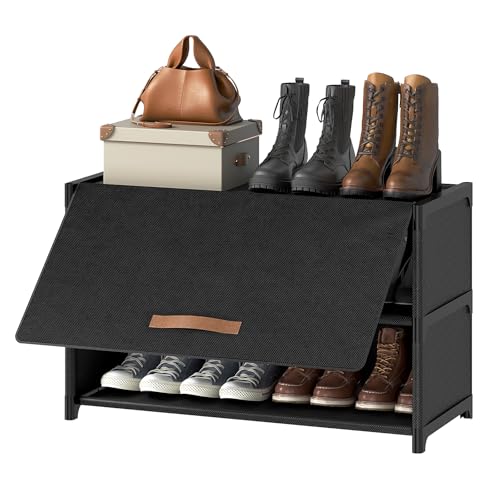
- Stores up to 12 pairs
- Enclosed door helps block dust and pets
- Lightweight non-woven and metal construction
Best For: Budget-conscious closets and pet households
Small-Space Style Pick
Natural Oak Rattan Shoe Cabinet

- Ultra-slim 6.6-inch depth
- Decorative arched rattan doors
- Anti-tipping hardware and 80-pound capacity
Best For: Small apartments and stylish narrow hallways
Best High-Capacity Rack
ROJASOP 10-Tier Covered Shoe Rack

- Stores about 50–55 pairs across 10 tiers
- Removable tier accommodates taller boots
- Dustproof cover includes four storage pockets
Best For: Large collections and vertical storage
Best Entryway Features

- Fits about 8–12 pairs in two flip drawers
- Only 9.4 inches deep for narrow spaces
- Adds four hooks and a protective top shelf
Best For: Organized entryways with limited floor space
Best Narrow Cabinet – GRUSIGN 2-Drawer Shoe Cabinet
If you want shoe cabinets under 100 with a finished, furniture-like look, the GRUSIGN cabinet combines concealed storage with a narrow 9.45-inch depth. Its two flip drawers, adjustable shelves, and elevated base help organize everyday footwear in compact entryways and hallways.
Best For: Small entryways that need enclosed storage for up to 16 pairs of shoes.
Pros:
- Four-tier interior can hold up to 16 pairs and accommodates different shoe types.
- Adjustable or removable shelves provide room for heels and boots.
- Flip doors help protect shoes from dust and pets, while the top fence holds small items.
- Metal framing, engineered wood construction, and an anti-tip kit add stability.
Cons:
- Assembly is required.
- Its 9.45-inch depth favors slimmer footwear storage rather than bulky items.
This is a strong choice when you want the tidy appearance of a cabinet without using much hallway space. The white finish and useful top surface make it practical for a streamlined entryway setup.
Best Vertical Rack – Kitsure 10-Tier Shoe Rack
Among shoe cabinets under 100, the Kitsure stands out for maximizing vertical space instead of floor area. This 10-tier rack reaches nearly 70 inches tall, stores up to 20 pairs, and includes a zippered cover for dust protection.
Best For: Closets, bedrooms, and narrow entryways where vertical storage is more useful than a low cabinet.
Pros:
- Ten tiers hold up to 20 pairs while using only a 17.5-inch width.
- Removable shelves can make space for boots or taller footwear.
- Zippered cover helps keep shoes clean, and side pockets hold small accessories.
- Tool-free assembly is designed for quick setup.
Cons:
- The tall, open-rack format may look less like traditional furniture than a cabinet.
- Fabric shelves and cover may offer less rigid support than solid shelving.
Choose this rack if capacity and floor-space efficiency matter most. Its adaptable layout and cover make it especially useful for renters, closets, or high-traffic areas that need organized but accessible storage.
Best Farmhouse Style – VASAGLE Flip-Drawer Shoe Cabinet
The VASAGLE is a practical pick among shoe cabinets under 100 if you want concealed storage with farmhouse-inspired styling. Its narrow profile, barn-door fronts, adjustable drawer shelves, and side hooks help keep an entryway organized without blocking the walkway.
Best For: Compact entryways needing attractive storage for approximately 14 to 16 pairs.
Pros:
- Two forward-opening flip drawers provide access without swinging into the walkway.
- Adjustable shelves accommodate flats, heels, slippers, and—when removed—some boots.
- Side hooks keep keys and bags convenient, while the raised top displays decor.
- Anti-tip hardware and non-slip feet improve stability and floor protection.
Cons:
- Boot storage reduces the cabinet’s overall shoe capacity.
- Assembly is required.
This cabinet balances useful organization with a decorative rustic-white appearance. It is a good fit for shoppers who want a compact, enclosed shoe solution that contributes to the room’s decor rather than looking purely utilitarian.
Best Lightweight Cabinet – 2-Door 5-Tier Shoe Cabinet
For shoppers comparing shoe cabinets under 100, this rustic-brown 5-tier model offers layered storage in a relatively lightweight design. Its two fabric doors, removable shelving, wood top, and compact footprint make it suited to entryways that need everyday organization without a bulky cabinet.
Best For: Apartments and small households organizing sneakers, flats, sandals, heels, and mid boots.
Pros:
- Five tiers provide space for roughly 15 to 20 pairs, depending on footwear size.
- Removable or adjustable shelves help accommodate different shoe styles.
- Fabric doors help shield footwear from dust, moisture, and pet hair.
- Wood top offers a spot for keys or decor, and the surface is easy to wipe clean.
Cons:
- Fabric zipper doors provide a softer enclosure than rigid cabinet doors.
- The product requires assembly, despite its relatively light 13.8-pound weight.
This model is appealing when you want a rustic look, flexible tier arrangement, and manageable weight. Its fabric-front construction keeps the design lighter and more casual than a solid engineered-wood cabinet.
Farmhouse Slim Pick – Walnut 2-Drawer Shoe Cabinet
If you need shoe cabinets under 100 for a narrow entryway, this VINGLI model combines a slim 9.45-inch depth with concealed storage and a farmhouse-inspired walnut finish. Its two flip drawers provide four tiers of interior storage, while the top offers space for keys or decor.
Best For: Narrow entryways that need closed, attractive shoe storage.
Pros:
- Compact design measures 31.6 inches wide and 9.4 inches deep.
- Two flip drawers with adjustable or removable panels accommodate different shoe heights.
- Anti-tipping hardware, wood legs, and a wipe-clean surface add practical convenience.
- Can hold approximately 17 pairs of smaller women’s shoes inside, plus additional pairs underneath, depending on shoe size.
Cons:
- The listed interior capacity is based on smaller women’s shoe sizes and may vary for larger footwear.
- Assembly is required.
This is a strong option when appearance and a shallow footprint matter as much as storage. The adjustable compartments improve flexibility, though shoppers with many large shoes may need a larger cabinet.
Budget Utility Pick – Black 3-Tier Shoe Cabinet
Among shoe cabinets under 100, this UNITSTAGE organizer focuses on simple, flexible storage. Its three-tier frame is enclosed by a door to help protect footwear from dust and pets, and the freestanding design can be used in a closet, bedroom, hallway, living room, or office.
Best For: Renters and budget shoppers who want lightweight, enclosed shoe storage.
Pros:
- Designed to store up to 12 pairs of shoes.
- Non-woven fabric is waterproof and easy to clean.
- Door helps keep shoes enclosed against dust and pet chewing.
- Can be customized for closets and used to store other items such as hats, clothes, or toys.
Cons:
- The fabric-and-metal construction is less cabinet-like than a solid wood or engineered-wood option.
- Assembly requires tightly connecting the plastic connectors and diaphragms.
- The supplied dimensions appear unusually listed, so verify the size before ordering.
This model suits shoppers who prioritize low-cost organization and portability over furniture-style construction. Its enclosed fabric door is useful for shared spaces and pet households, while the expandable design adds versatility.
Small-Space Style Pick – Natural Oak Rattan Shoe Cabinet
This VEVOR cabinet is a practical choice for shoe cabinets under 100 when hallway depth is limited. At 6.6 inches deep, it uses two flip drawers to conceal footwear while adding arched rattan doors, oak legs, and gold-tone handles for a more decorative entryway look.
Best For: Singles or couples in small apartments with limited shoe storage needs.
Pros:
- Extra-slim 6.6-inch depth works well in narrow hallways and small apartments.
- Two flip drawers keep shoes hidden and the entryway tidy.
- Arched rattan doors, oak legs, and yellow aluminum handles add distinctive style.
- Includes anti-tipping devices and thickened 15 mm side and top panels for added stability.
Cons:
- The compact footprint is intended for singles, couples, and people with fewer shoes.
- Only two shelves and two compartments are listed, so storage flexibility may be limited.
- Assembly is required.
Choose this cabinet when a very shallow profile and decorative finish are priorities. Its listed 80-pound maximum weight capacity and wall-safety hardware are useful, but the compact size makes it less suitable for large households.
Best Slim Cabinet – FTZxHKLX 2-Drawer Shoe Cabinet
For shoppers comparing shoe cabinets under 100, this slim white cabinet combines concealed storage with a useful countertop. Its two flip drawers hold about 8–10 pairs, while the adjustable panels help accommodate different shoe sizes in a compact entryway footprint.
Best For: Small entryways, hallways, and shoppers who want hidden shoe storage with a drawer and display surface.
Pros:
- Two longer flip drawers are designed to fit men’s shoes and some thicker footwear.
- Adjustable, removable panels offer more flexible organization.
- Includes a small drawer for keys, wallets, or walking essentials.
- Waterproof countertop and freestanding design add everyday versatility.
Cons:
- Assembly may take up to two hours.
- Its approximately 11.81-inch depth may still require careful placement in very narrow spaces.
This is a practical choice when you prefer a cleaner, concealed look over an open rack. The bamboo top, black alloy handles, and pet-resistant hidden storage give it a furniture-like appearance, though buyers should plan for assembly.
Best High-Capacity Rack – ROJASOP 10-Tier Covered Shoe Rack
If your priority is maximum capacity among shoe cabinets under 100, this tall ROJASOP rack provides 10 tiers and room for approximately 50–55 pairs. Its narrow depth, removable tier, and included cover make it suited to closets, garages, bedrooms, and larger entryways.
Best For: Large shoe collections, households storing boots and sneakers, and shoppers who prefer open tiered shelving with dust protection.
Pros:
- 10 layers provide stated storage for about 50–55 pairs.
- Removable tiers can create extra height for boots and taller footwear.
- Non-woven cover helps protect shoes from dust and includes four pockets.
- Metal tubing and reinforced plastic connectors support up to 10 pounds per tier.
Cons:
- At 68.9 inches tall, it may not suit low-clearance spaces.
- The rack is substantially wider than a slim cabinet at 33.8 inches.
- Assembly is required.
This rack stands out for capacity rather than furniture-style concealment. It makes efficient use of vertical space and offers a removable cover, but measure both the height and width carefully before choosing it.
Best Entryway Features – 2-Drawer Shoe Storage Cabinet
This white two-drawer cabinet is a useful option for shoe cabinets under 100 when you need concealed storage in a narrow entryway. Measuring 23.6 inches wide and 9.4 inches deep, it organizes roughly 8–12 pairs while adding hooks and a guarded top shelf.
Best For: Narrow hallways and entryways where shoe storage, hanging hooks, and a small display shelf are needed together.
Pros:
- Slim 9.4-inch depth helps conserve floor space.
- Two flip drawers include adjustable panels for sneakers, ankle boots, and high heels.
- Four hooks provide a place for bags or umbrellas.
- Recessed toe-kick and included anti-tip kit improve stability and wall fit.
Cons:
- Its stated capacity of 8–12 pairs is limited compared with tall racks.
- Assembly is required, even though the parts and instructions are labeled for setup.
This cabinet offers a strong balance of compact dimensions and entryway utility. The hooks and protective top rail make it more functional than a basic shoe cabinet, while adjustable drawer panels help it handle varied footwear.
How We Picked the Best Shoe Cabinets Under 100
We evaluated these Shoe Cabinets Under 100 based on storage capacity, overall footprint, organization, accessibility, construction details, and suitability for common entryway layouts. We also considered whether each design offers useful features such as adjustable shelves, flip drawers, protective covers, doors, stackability, or elevated legs.
Because budget shoe storage often involves trade-offs, the goal was not to identify one universal winner. Instead, the selection includes different formats for apartments, family entryways, closets, bedrooms, and high-volume shoe collections.
Quick Comparison
| Best For | Recommended Style | Why It Works |
|---|---|---|
| Small entryways | Narrow flip-drawer cabinet | Uses vertical space while keeping shoes concealed |
| Visible, easy-access storage | Open tiered rack | Makes frequently worn shoes quick to reach |
| Dust protection | Covered shoe rack | Helps shield footwear from dust and visual clutter |
| Families or larger collections | Tall or multi-tier rack | Provides substantially more capacity in a small footprint |
| Decor-focused rooms | Door-front cabinet | Blends storage with entryway furniture |
Key Buying Factors for Shoe Cabinets Under 100
Measure Width, Depth, and Clearance
Check the available wall or floor space before ordering. Narrow cabinets work well beside doors and in apartment hallways, while deeper units may accommodate larger shoes more comfortably. Confirm that doors, drawers, and flip compartments can open fully without hitting nearby furniture.
Match Capacity to Your Household
Advertised pair counts are useful estimates, but boots, high-top sneakers, and larger sizes may reduce practical capacity. Choose a cabinet with extra room if it will store seasonal footwear or multiple family members’ shoes.
Choose Open, Covered, or Concealed Storage
Open racks offer the fastest access but leave shoes visible. Fabric covers reduce dust while preserving a rack-style layout. Flip drawers and closed doors create a cleaner appearance, making them a better fit for formal entryways or shared living areas.
Look for Stability and Assembly Details
Review the frame materials, shelf construction, base design, and included hardware. Tall racks should be positioned securely, and cabinet-style units should be assembled carefully so drawers and doors align properly. Adjustable shelves can be especially helpful for accommodating different shoe heights.
Who Should Buy Which Shoe Cabinets Under 100?
Choose a slim flip-drawer cabinet if your priority is a tidy appearance and your entryway has limited depth. A covered vertical rack is a practical choice for renters, closets, or anyone who wants high capacity without a solid cabinet body. Open tiered storage suits households that rotate through the same shoes daily and value quick access.
For larger collections, select a tall, stackable, or multi-tier organizer rather than relying on a compact cabinet’s maximum stated capacity. If appearance matters most, choose a door-front cabinet with a finish that complements your existing furniture. Before buying, prioritize accurate measurements and realistic capacity over the largest advertised pair count.