Window cleaning robots can reduce the effort required to clean large panes, high windows, glass doors, and some smooth tile surfaces. Models under $200 typically focus on strong suction, automatic spray systems, edge detection, and safety backups rather than fully hands-free cleaning.
This roundup compares 10 affordable options by cleaning coverage, navigation, water delivery, control methods, and safety features so you can choose a practical robot for your home.
Best 10 Window Cleaning Robots Under 200 Picks for 2026
Most Versatile Spray System
WA9C Pro Window Cleaning Robot

- Four-nozzle spray system for even moisture
- Six cleaning modes with remote control
- 25-minute power-failure backup and safety rope
Best For: Flexible glass-window cleaning with adjustable spray coverage
Best for High-Rise Coverage

- 6400Pa variable suction for vertical glass
- Round body and smart edge navigation
- 30-minute UPS backup with heavy-duty safety cable
Best For: High windows, skylights, mirrors, and tile walls
Best Simple Remote-Control Pick

- 6500Pa suction with edge detection
- Three cleaning paths and remote control
- Dual spray, 60ml tank, and 10 included pads
Best For: Routine cleaning of windows, glass doors, and mirrors
Best Compact Pick
Tosima W5 Adaptive-Suction Window Robot
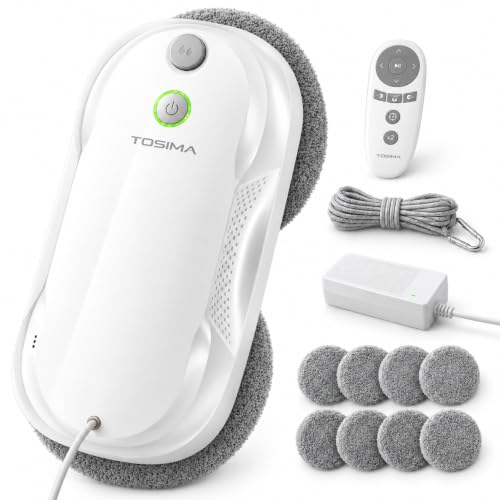
- Lightweight 4-pound compact design
- Adaptive suction up to 6400Pa
- Edge sensing and triple safety system
Best For: Apartments, condos, and smaller homes
Best for App Control
YW160S Dual-Spray Window Cleaning Robot
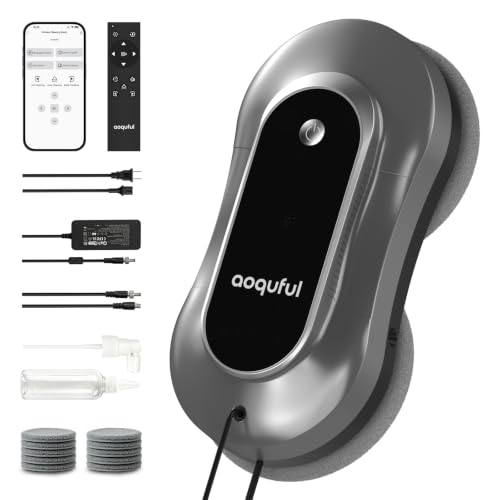
- App and remote control with voice prompts
- AI navigation, spot cleaning, and resume mode
- Includes 12 washable microfiber cloths
Best For: Multi-surface cleaning with app-based control
Best Glass-Only Value
Dual-Spray Window Cleaning Robot

- Dual spray and 50ml water tank
- 3000Pa suction with safety rope and UPS
- Designed for smooth glass and frameless windows
Best For: Routine cleaning of compatible glass surfaces
Best High-Suction Pick
5600Pa Automatic Window Cleaner

- 5600Pa suction for smooth surfaces
- Automatic or manual water spraying
- Three cleaning modes with remote control
Best For: Windows, tiles, and glass doors needing strong suction
Best Smart-Path Option

- AI 5.0 path planning with edge detection
- Dual spray and double-helix cleaning heads
- Three automatic modes plus manual remote control
Best For: Indoor windows, mirrors, and glass doors
Most Versatile Spray System – WA9C Pro Window Cleaning Robot
For shoppers comparing window cleaning robots under 200, the WA9C Pro stands out for its four-nozzle spray system, multiple cleaning paths, and remote control. It is designed for smooth glass windows and includes safety features for high-window cleaning.
Best For: Buyers who want adjustable spray coverage, several automated routes, and manual remote control.
Pros:
- Four precision nozzles provide broad, even moisture coverage.
- Offers N-shaped, Z-shaped, and manual cleaning modes.
- Includes air-pressure monitoring, drop sensors, a safety rope, and up to 25 minutes of power-failure backup.
- Comes with replacement nozzles, four cleaning mops, and an unclogging kit.
Cons:
- Its 6-pound weight may be less convenient to handle than lighter models.
- The 8-inch cleaning path may require multiple passes on wider windows.
- It is intended for glass windows rather than a broad range of surfaces.
The WA9C Pro is a feature-rich choice for routine glass cleaning, especially when spray control and cleaning-mode flexibility matter. Use the included safety rope for overhead work and keep expectations realistic for heavily soiled glass.
Best for High-Rise Coverage – X6 Window Cleaning Robot
Among window cleaning robots under 200, the X6 emphasizes strong 6400Pa variable suction, edge detection, and a slim round design. It is built for glass, mirrors, tile walls, skylights, and both inside and outside window cleaning.
Best For: Homes and offices with high, floor-to-ceiling, narrow-framed, or mixed smooth surfaces.
Pros:
- Variable 6400Pa suction is designed to maintain a firm hold on vertical glass.
- Dual spray nozzles and AI navigation help support consistent coverage.
- Includes a 30-minute UPS backup, edge sensors, and a safety cable rated to hold at least 150 pounds.
- Its round body is designed to reduce blind spots associated with square robots.
Cons:
- At 63 dB, it may be noticeable while operating.
- Smears can occur if the glass is oversprayed or dirty pads are not replaced.
- Heavy buildup may require two cleaning passes.
The X6 is a strong option when reach, surface versatility, and safety measures are priorities. Follow the recommended light-spray and clean-pad routine for the best chance of a streak-free result.
Best Compact Design – ECOVACS WINBOT MINI
For shoppers seeking window cleaning robots under 200 for tight spaces, the ECOVACS WINBOT MINI combines a slim 2.17-inch profile with automatic ultrasonic spraying. Its compact body is intended for compatible flat, smooth glass where bulky cleaners may not fit.
Best For: Narrow or hard-to-reach windows and everyday glass cleaning with app or button control.
Pros:
- Compact 8.46-inch body and slim profile suit limited-space window areas.
- Ultrasonic spray creates a fine mist to help loosen everyday dirt.
- Automatic path planning, multiple app modes, and one-touch operation simplify use.
- Bumper-free construction helps it clean closer to edges and corners.
Cons:
- It is not suitable for curved, cracked, uneven, or excessively small windows.
- The 60ml water tank is smaller than some higher-capacity models.
- It must remain connected to power during cleaning.
The WINBOT MINI is a convenient fit for compatible smooth glass, particularly where a slim robot is more practical than a larger unit. Its compact format and washable pad make it well suited to regular maintenance rather than difficult restoration cleaning.
Best Simple Remote-Control Pick – 6500Pa Window Cleaning Robot
This model is a straightforward contender among window cleaning robots under 200, pairing 6500Pa suction with dual-sided spray and three selectable cleaning paths. The included remote makes it practical for high windows, glass doors, mirrors, and floor-to-ceiling glass.
Best For: Buyers who want strong suction, basic route choices, and remote operation without unnecessary complexity.
Pros:
- 6500Pa suction, edge detection, and a safety rope support secure operation on smooth glass.
- Three routes—top-down, left-down, and right-down—cover different window layouts.
- Dual spray nozzles and a 60ml tank help loosen routine dust and fingerprints.
- Includes 10 cleaning pads for ongoing maintenance.
Cons:
- It is intended for regularly maintained glass; heavy buildup may need pre-cleaning.
- Stubborn water stains may require additional cycles.
- The supplied notes specify a 25-minute UPS backup, so longer outages may exceed its reserve.
The 6500Pa Window Cleaning Robot makes sense for routine upkeep when you value remote control and a small set of useful cleaning paths. Properly dampening and washing the pads is important for avoiding streaks and maintaining performance.
Best Overall – Tosima X1 Ultrasonic Window Cleaning Robot
If you want one of the more versatile window cleaning robots under 200, the Tosima X1 combines dual-nozzle ultrasonic water atomization, a visible 85 ml tank, and automatic S-shaped navigation. Its remote control and support for windows as small as 30 × 30 cm make it practical for varied household glass surfaces.
Best For: Households cleaning both large windows and smaller or overhead glass surfaces.
Pros:
- Dual spray nozzles direct water along the travel path to help limit smearing.
- Visible 85 ml water tank makes the remaining water easy to check.
- Backup battery keeps the robot attached for about 25 minutes during a power outage.
- Remote control allows manual adjustments and overhead cleaning.
Cons:
- At 5 pounds, it is heavier than some compact alternatives.
- Its 65 dB noise level may be noticeable during operation.
The X1 is a strong all-around choice when flexible surface coverage and a visible water supply matter. Its safety tether, suction, and backup battery add reassurance, while the wet/dry capability supports routine cleaning.
Best Compact Pick – Tosima W5 Adaptive-Suction Window Robot
Among window cleaning robots under 200, the Tosima W5 stands out for apartments and smaller homes. Its compact 4-pound design, automatic navigation, adaptive suction up to 6400Pa, and dual-spray cleaning system are designed for convenient everyday use.
Best For: Apartment dwellers and anyone who prioritizes a lightweight, easy-to-store window cleaner.
Pros:
- Compact, lightweight design is easier to handle and store.
- Adaptive suction automatically adjusts to the surface and reaches up to 6400Pa.
- Air pressure sensing helps it detect edges, including on frameless glass.
- Triple safety system includes suction, a 220 kg-rated safety rope, and backup battery power.
Cons:
- Its 6-inch cleaning path is narrower than the X1’s listed 8-inch path.
- The manufacturer warranty is listed as one year.
The W5 offers a particularly approachable package for smaller living spaces. Adaptive suction, edge sensing, and multiple safety measures make it a practical choice for smooth glass surfaces without the bulk of larger equipment.
Best for App Control – YW160S Dual-Spray Window Cleaning Robot
This YW160S is a feature-rich option among window cleaning robots under 200, pairing app and remote control with AI navigation, dual water spray, and spot-cleaning mode. It is designed for smooth surfaces including windows, glass doors, tiles, and mirrors.
Best For: Users who want app control, targeted spot cleaning, and reusable cloths for several smooth surfaces.
Pros:
- AI navigation plans paths and detects frames and obstacles.
- Dual spray system uses a 70 ml tank for consistent dampness.
- Spot-cleaning and resume functions address stubborn areas and interruptions.
- Includes 12 washable microfiber cloths and a 4-meter safety rope.
Cons:
- At 6.2 pounds, it is the heaviest product in this comparison.
- The listed 2800Pa suction is lower than the Tosima W5’s maximum rating.
- It has a one-year manufacturer warranty.
The YW160S is appealing if control options and cleaning flexibility are more important than minimal weight. Its app, resume function, and generous supply of washable cloths support repeated cleaning across different smooth surfaces.
Best Glass-Only Value – Dual-Spray Window Cleaning Robot
If you’re comparing window cleaning robots under 200, this model stands out for its dual-spray system, edge detection, and 3000Pa suction. It is designed for smooth glass, including frameless windows, glass doors, skylights, and mirrors, but requires corded operation and careful pre-cleaning.
Best For: Homeowners cleaning suitable glass windows, doors, mirrors, and skylights at angles of at least 30 degrees from horizontal.
Pros:
- Dual atomizing spray with a 50ml water tank and 10 microfiber cloths.
- Three cleaning paths, edge detection, and intelligent path planning.
- 3000Pa suction, safety rope, and UPS backup for emergency power loss.
- Includes remote control and replacement cleaning rings.
Cons:
- It must remain plugged in; the UPS is emergency backup rather than cordless operation.
- Not recommended for curved glass, thick trim, raised decorations, or horizontal surfaces.
- Heavy stains and debris should be manually pre-cleaned to protect suction.
This is a practical choice for routine maintenance on compatible glass. Its two-pass cleaning recommendation and replaceable cloths can help improve results, but the surface restrictions make proper preparation essential.
Best High-Suction Pick – 5600Pa Automatic Window Cleaner
Among window cleaning robots under 200, this model offers the highest listed suction in the group at 5600Pa, along with automatic or manual water spraying and three path-planning modes. Its rectangular design is intended for smooth surfaces such as windows, tiles, and glass doors.
Best For: Users who want strong suction, remote-controlled path selection, and cleaning support for smooth windows, tiles, and glass doors.
Pros:
- 5600Pa suction with automatic and manual water-spray modes.
- Three automatic cleaning modes plus manual directional control.
- Double spiral cleaning head and microfiber pads for deeper cleaning.
- Includes a safety rope rated for a 300-pound load, 10 cleaning pads, and four cleaning rings.
Cons:
- Its 30ml water container is smaller than some competing models.
- The product is intended for smooth surfaces, so compatibility with textured or uneven areas may be limited.
- As a corded electric cleaner, it is not designed for fully cordless operation.
The strong suction and flexible control scheme make this a compelling option for large or challenging smooth surfaces. Buyers should still verify surface compatibility and follow the safety-rope instructions during use.
Best Smart-Path Option – AI Dual-Spray Glass Cleaner
This AI-equipped option gives shoppers comparing window cleaning robots under 200 intelligent path planning, dual water nozzles, and remote control. It is built for glass windows, mirrors, and doors, with edge detection intended to help the robot navigate frames and obstacles.
Best For: Users who prioritize automated navigation, multiple cleaning modes, and spray control for indoor glass surfaces.
Pros:
- AI 5.0 path planning and edge detection adjust movement around frames and obstacles.
- Dual water nozzles and double-helix cleaning heads support dust and smudge removal.
- Remote control provides three automatic modes plus manual operation.
- 3000Pa suction, UPS power storage, and a high-strength safety rope add operating protection.
Cons:
- The supplied details identify indoor use, so outdoor applications are not clearly established.
- It still depends on suitable glass surfaces and careful setup for safe operation.
- The listed battery-life specification is ambiguous, despite the stated UPS power-outage support.
This model is a good fit when navigation features matter as much as basic wiping. Its AI path planning and spray controls add convenience, while the safety system and surface limitations should be considered before purchase.
How We Picked the Best Window Cleaning Robots Under 200
We focused on the features that matter most during real-world glass cleaning: suction strength, spray design, path planning, edge detection, safety systems, controls, and surface compatibility. We also considered whether each robot appears suited to interior windows, exterior glass, large panes, framed windows, or other smooth surfaces such as tiles and glass doors.
Because performance can vary with glass condition, frame design, pad cleanliness, and the amount of water used, suction numbers are not the only measure of quality. A useful model should maintain contact, move predictably, distribute cleaning solution evenly, and provide clear warnings when it needs attention.
Quick Comparison
| Feature | What to Look For | Why It Matters |
|---|---|---|
| Suction | About 3,000Pa to 6,500Pa | Helps the robot stay attached to vertical glass |
| Spray system | Dual nozzles or ultrasonic misting | Improves coverage and limits manual spraying |
| Navigation | Smart path planning and edge detection | Supports more consistent coverage |
| Safety | Backup battery, tether, and alerts | Reduces risk if power or suction is interrupted |
| Controls | Remote or app operation | Makes setup and monitoring easier |
Key Buying Factors for Window Cleaning Robots Under 200
Check Surface and Window Compatibility
Most affordable window robots are designed for smooth, flat glass. Confirm whether a model supports framed or frameless windows, double-glazed surfaces, tiles, mirrors, or glass doors. Textured, wet, greasy, heavily dusty, or uneven surfaces may reduce grip and cleaning quality.
Compare Spray and Water-Tank Designs
Dual-spray systems can cover a wider area, while ultrasonic misting may use less liquid and reduce dripping. A visible tank is convenient because you can check the remaining solution quickly. Avoid over-wetting the pad or glass, since excess moisture can affect traction and leave streaks.
Prioritize Safety Features
A safety tether and internal backup battery are important for exterior or high-window use. Look for automatic suction monitoring, power-failure protection, audible alerts, and clear instructions for anchoring the tether. Never leave a robot unattended on an exterior window, even when safety systems are included.
Consider Navigation and Cleaning Speed
Edge detection and intelligent path planning help the robot cover more of the pane without repeated manual repositioning. Still, many budget models work best as maintenance tools rather than instant deep cleaners. You may need to pre-clean loose dirt and replace or wash pads regularly.
Who Should Buy Which Window Cleaning Robots Under 200?
Choose a compact model if you mainly clean smaller interior windows or need easier storage. For large panes and glass doors, prioritize higher suction, a larger water tank, longer cable reach, and reliable path planning. Dual-nozzle models suit users who want broader spray coverage, while ultrasonic systems may appeal to those who prefer controlled misting.
If you want app control, choose a connected model with dependable manual controls as a backup. For occasional cleaning, a simpler remote-controlled robot may offer better value. Buyers with many high or exterior windows should prioritize safety equipment and manufacturer support over extra cleaning modes or headline suction figures.