Choosing the right commercial espresso machine means balancing drink volume, consistency, available space, and operator skill. The best fit for a busy café may be excessive for a home barista, while a compact machine can become a bottleneck in a professional setting.
We’ve gathered 10 notable options, ranging from two-group café equipment to capable prosumer and automatic models, so you can compare features and match the machine to your daily workflow.
Best 10 Commercial Espresso Machine Picks for 2026
High-Volume Control
2-Group PID Commercial Espresso Machine

- Three boilers with independent PID temperature control
- Rotary pump and three pressure gauges
- Designed for roughly 150–250 cups per day
Best For: Busy cafés, restaurants, and coffee shops
Compact Café Workhorse
Nuova Simonelli Appia Compact 2-Gr

- Two-group format for commercial service
- Compact design for smaller operations
- Includes hot-water and steam wands
Best For: Small cafés, restaurants, and coffee carts
Home Barista Precision
Gemilai Owl G3006 Espresso Machine

- 58mm commercial group head and 15-bar pump
- PID control with dual temperature and shot displays
- Swivel steam wand for microfoam and latte art
Best For: Home baristas seeking commercial-style control
Compact Pour-Over Classic
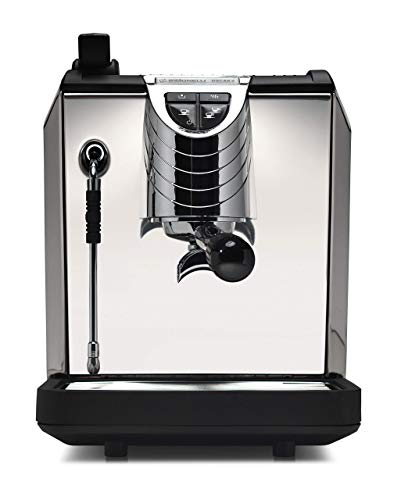
- Compact 110-volt semi-automatic design
- Pour-over water source with 3-liter capacity
- Includes portafilter, baskets, tamper, and frother
Best For: Home espresso users with limited counter space
Fast-Heating Favorite
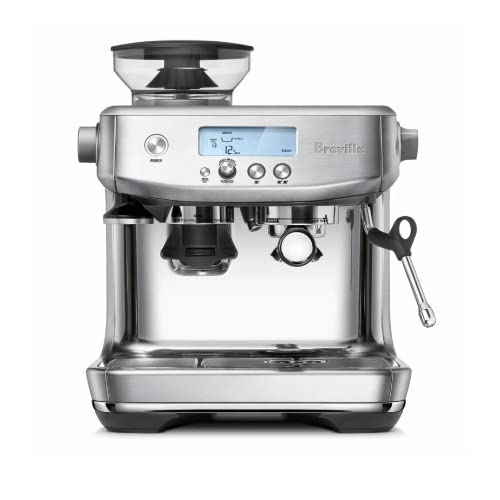
- 3-second ThermoJet heat-up
- Built-in conical burr grinder
- LCD-guided espresso preparation
Best For: Small offices, studios, and serious home users wanting an integrated setup
High-Volume Workhorse

- Two-group commercial design
- Programmable volumetric dosing
- Automated backflushing
Best For: Cafés, restaurants, and high-volume professional coffee service
Hands-On Classic

- Integrated grinder with grind dial
- PID-controlled extraction
- Manual steam wand for latte art
Best For: Home baristas learning hands-on espresso preparation
Best All-in-One Commercial Espresso Machine Alternative

- 20 preset hot and iced recipes
- Automatic milk frothing for dairy or plant-based milk
- Cold brew in under three minutes
Best For: Offices and homes needing broad drink variety with minimal manual work
Best Touchscreen Commercial Espresso Machine

- Three-second ThermoJet heat-up
- Automatic microfoam milk texturing
- Saves up to eight personalized coffees
Best For: Users wanting guided operation and customizable espresso drinks
Best Traditional Commercial-Style Espresso Machine
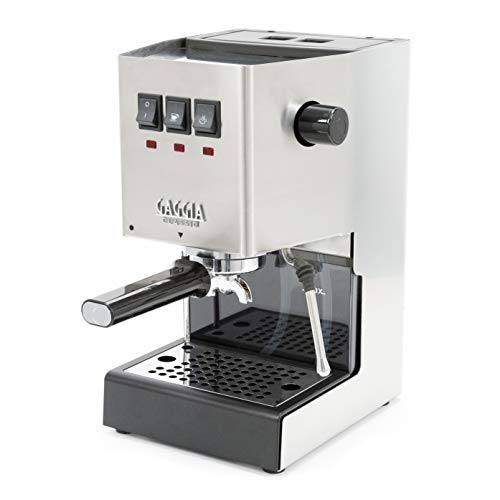
- Solid steel housing made in Italy
- 58mm commercial portafilter
- Commercial steam wand and three-way solenoid valve
Best For: Experienced baristas seeking a manual, café-style workflow
High-Volume Control – 2-Group PID Commercial Espresso Machine
This commercial espresso machine is built for busy cafés, restaurants, and coffee shops that need high output and detailed brewing control. Its three-boiler design, touchscreen adjustments, and programmable extraction features support consistent service throughout the day.
Best For: Cafés and restaurants serving approximately 150–250 cups daily.
Pros:
- Three-boiler system with PID temperature control from 30–98°C.
- Rotary pump, 304 stainless steel group heads, and three pressure gauges.
- Programmable pre-infusion, extraction volume, scheduling, and automatic cleaning.
- Large 8L steam boiler with adjustable 1.2–1.6 bar steam pressure.
Cons:
- Large and heavy at approximately 154.3 pounds.
- Its 110-volt, 32.2-inch-wide design requires dedicated counter space.
Choose this model when workflow automation and high daily capacity matter more than a compact footprint. The touchscreen and independent boiler controls are especially useful for operators who want repeatable recipes and streamlined maintenance.
Compact Café Workhorse – Nuova Simonelli Appia Compact 2-Gr
The Nuova Simonelli Appia Compact is a practical commercial espresso machine for operations that need a two-group format without an oversized footprint. It is specified for restaurants, small coffee shops, and coffee carts, with a 220-volt setup and included hot-water and steam wands.
Best For: Small coffee shops, restaurants, and coffee carts with compatible 220-volt power.
Pros:
- Compact two-group configuration for space-conscious commercial service.
- Designed for restaurants, small coffee shops, and coffee carts.
- Includes both a hot-water wand and a steam wand.
- Uses ground coffee with a reusable filter.
Cons:
- Requires 220-volt power, which may limit installation options.
- The supplied notes provide limited information about temperature controls and programming.
This is a sensible option when counter space and commercial usability are priorities. Confirm the location’s electrical requirements before buying, since the 220-volt specification is an important installation consideration.
Home Barista Precision – Gemilai Owl G3006 Espresso Machine
The Gemilai Owl G3006 brings several commercial-style features to a home setup. This semi-automatic commercial espresso machine has a 58mm group system, PID temperature control, dual displays, adjustable pre-infusion, and a 360-degree steam wand for espresso and milk drinks.
Best For: Home baristas who want commercial-style controls and latte-art capability.
Pros:
- 58mm commercial portafilter with a 15-bar Italian pump.
- PID temperature adjustment from 176–215°F and real-time dual display.
- Adjustable pre-infusion and a 360-degree stainless steel steam wand.
- Removable 1.7L tank and detachable drip tray simplify maintenance.
Cons:
- Semi-automatic operation requires hands-on dosing and extraction.
- Its home-oriented 120-volt, 1500-watt design is not intended for high-volume café service.
The G3006 is a strong fit for enthusiasts who value recipe adjustment without stepping up to a full commercial installation. Its included portafilter, baskets, tamper, and cleaning tools make it relatively well equipped for home use.
Compact Pour-Over Classic – Nuova Simonelli Oscar II
The Nuova Simonelli Oscar II is a compact semi-automatic espresso machine for home users who prefer a pour-over water source. Its 3-liter capacity, 110-volt power, timer, and included brewing and milk-frothing accessories make it suited to everyday home espresso preparation.
Best For: Home espresso users wanting a compact, manually operated machine.
Pros:
- Compact 16-by-12-by-16-inch footprint for a home counter.
- Pour-over water source avoids requiring a plumbed installation.
- Includes tamper, portafilter, shot baskets, and milk frother.
- 3-liter capacity and built-in timer support routine home use.
Cons:
- Semi-automatic operation requires manual preparation and extraction.
- Recommended primarily for home espresso rather than commercial service.
- Water-softener requirements may add installation and maintenance considerations.
Consider the Oscar II if you want Nuova Simonelli construction in a relatively compact home format. Its pour-over design is convenient for flexible placement, but users should account for the stated water-quality requirements to protect the machine and warranty.
Fast-Heating Favorite – Breville Barista Pro
The Breville Barista Pro is a practical commercial espresso machine alternative for small offices, studios, or serious home setups that want quick heat-up and guided control. Its integrated burr grinder, PID temperature regulation, and LCD interface streamline the path from whole beans to espresso, while the steam wand supports manual milk texturing.
Best For: Users who want an all-in-one espresso setup with fast heat-up, integrated grinding, and an approachable interface.
Pros:
- ThermoJet heating reaches extraction temperature in 3 seconds and transitions quickly from espresso to steam.
- Integrated precision conical burr grinder doses coffee on demand.
- PID temperature control and low-pressure pre-infusion support balanced extraction.
- LCD display provides grinding and extraction progress information.
Cons:
- Manual operation requires practice for consistent milk texturing.
- Its 67-ounce tank and 1/2-pound hopper are better suited to lower-volume use than a busy café.
- It is a 120-volt machine with a 1680-watt rating.
Choose the Barista Pro when convenience and learning support matter as much as espresso control. It delivers useful automation around grinding and temperature while retaining hands-on steaming and dosing adjustments.
High-Volume Workhorse – Nuova Simonelli Appia Life
The Nuova Simonelli Appia Life is a commercial espresso machine built for high-volume locations and professional coffee service. Its two-group design, programmable volumetric dosing, durable frame, and 240-volt, 3400-watt configuration are aimed at consistent service rather than casual countertop use.
Best For: Cafés, restaurants, and other high-volume locations needing two-group workflow and repeatable shot dosing.
Pros:
- Two groups support a more efficient commercial workflow.
- Four programmable espresso volumes per group enable one-touch consistency.
- Automated backflushing simplifies routine group cleaning.
- Cool-touch steam wands and push-pull controls support safer, more ergonomic operation.
Cons:
- At 220 pounds and 31 inches wide, it requires substantial counter space and support.
- Its 240-volt, 3400-watt setup may require dedicated commercial electrical service.
- The professional configuration is excessive for low-volume home use.
For a busy service environment, the Appia Life’s strongest advantages are workflow and repeatability. Confirm your electrical, counter, and installation requirements before choosing this substantially sized commercial machine.
Hands-On Classic – Breville Barista Express
The Breville Barista Express is a hands-on commercial espresso machine alternative for home baristas and small, lower-volume workspaces. It combines an integrated conical burr grinder, adjustable grind-size dial, PID temperature regulation, and a manual steam wand so users can control the preparation from bean to cup.
Best For: Home baristas who want manual control, built-in grinding, and a straightforward path to espresso and milk drinks.
Pros:
- Grinds directly into the portafilter with adjustable grind size and grind amount.
- PID temperature regulation supports precise espresso extraction.
- Low-pressure pre-infusion helps draw out flavor evenly.
- Includes a portafilter, integrated tamper, milk jug, trimming tool, and cleaning accessories.
Cons:
- Manual dialing, tamping, extraction, and steaming require hands-on practice.
- The 67-ounce water tank and 1/2-pound hopper are not designed for high-volume commercial service.
- Its one-year limited warranty is shorter than the Barista Pro’s listed warranty.
The Barista Express is a strong fit when learning and control take priority over speed or commercial throughput. It offers a complete bean-to-espresso workflow, but users should expect to develop their technique for consistent results.
Best All-in-One Commercial Espresso Machine Alternative – De'Longhi Magnifica Duo
The De’Longhi Magnifica Duo is a fully automatic commercial espresso machine option for offices and high-volume home setups that want broad drink variety with minimal manual work. Its touchscreen offers 20 preset hot and iced recipes, while the integrated grinder and automatic milk systems streamline preparation.
Best For: Offices and homes that want espresso, drip coffee, cold brew, and milk drinks from one automatic machine.
Pros:
- Offers 20 preset hot and iced drink recipes.
- Uses separate brewing technologies for espresso, drip coffee, and cold brew.
- LatteCrema Hot and Cool systems froth dairy or plant-based milk.
- Removable, dishwasher-safe components and an auto-clean function simplify upkeep.
Cons:
- Its 19.69-inch depth requires substantial counter space.
- The fully automatic design provides less hands-on control than a traditional portafilter machine.
Choose the Magnifica Duo when convenience and menu flexibility matter more than manual barista control. Cold brew in under three minutes and automatic frothing make it especially versatile for mixed office preferences.
Best Touchscreen Commercial Espresso Machine – Breville Barista Touch
The Breville Barista Touch is a commercial espresso machine-inspired setup for users who want guided operation without giving up control. Its touchscreen walks through grinding, brewing, and milk preparation, while PID temperature control, low-pressure pre-infusion, and an automatic steam wand support consistent espresso drinks.
Best For: Home baristas and small office settings that want customizable espresso beverages with guided touchscreen operation.
Pros:
- ThermoJet heating system reaches extraction temperature in three seconds.
- Integrated conical burr grinder doses coffee on demand.
- Automatic steam wand allows adjustment of milk temperature and texture.
- Stores up to eight personalized coffees and includes a 67-ounce water tank.
Cons:
- It requires more hands-on preparation than a fully automatic drink machine.
- The two-year limited repair warranty is shorter than some extended coverage options.
The Barista Touch is a strong fit for users who want café-style customization in an approachable format. It balances automation with manual adjustments for grinding, extraction, and milk texture.
Best Traditional Commercial-Style Espresso Machine – Gaggia E24 Espresso Machine
The Gaggia E24 is a traditional commercial espresso machine-style choice for users who prioritize durable construction and café-oriented components. It combines a solid steel housing with a 58mm commercial portafilter, a commercial three-way solenoid valve, and a commercial steam wand.
Best For: Experienced home baristas who prefer manual espresso preparation and commercial-style hardware.
Pros:
- Solid steel housing provides a durable exterior.
- Made in Italy.
- Uses a 58mm commercial portafilter and commercial three-way solenoid valve.
- Includes a commercial steam wand for manual milk steaming.
Cons:
- Manual components require more skill and preparation than automatic machines.
- The supplied notes do not list an integrated grinder or preset drink programs.
The Gaggia E24 is best suited to buyers who value traditional workflow and commercial-style parts over one-touch convenience. It is a focused espresso machine rather than an all-in-one beverage system.
How We Picked These Commercial Espresso Machines
We focused on machines with useful combinations of brewing consistency, temperature control, steam capability, durability, workflow speed, and ease of operation. The selection includes traditional commercial machines, compact semi-automatic models, prosumer machines, and automatic systems because “commercial” needs vary by setting. We also considered group configuration, voltage requirements, controls, milk preparation, cleaning demands, and the type of user each machine best serves.
Quick Comparison
| Best For | Look For | Why It Matters |
|---|---|---|
| Busy café | Two groups, strong steam power, plumb-in capability | Supports simultaneous shots and milk drinks during rushes |
| Small shop or office | Compact footprint, programmable dosing, reliable boiler system | Saves space while improving repeatability |
| Experienced home barista | PID control, commercial group head, quality grinder | Provides hands-on control and stable extraction |
| Convenience-focused user | Automatic recipes and integrated milk features | Reduces training and preparation time |
Key Buying Factors for a Commercial Espresso Machine
Capacity and Workflow
Estimate drinks per hour rather than choosing by appearance. Two-group machines are better suited to sustained café service, while single-group or compact units can work well for lower-volume counters, offices, and home use. Consider whether the machine can brew and steam at the same time.
Temperature and Dosing Control
PID temperature regulation, programmable volumetric dosing, and a stable commercial-style group head can make shots more repeatable. Manual controls offer flexibility, while automatic dosing helps different operators achieve consistent results.
Power, Plumbing, and Space
Check voltage before buying; some commercial models require 220 or 240 volts and may need professional installation. Confirm water-line and drainage requirements, clearance for portafilters, and enough room for a grinder and knock box.
Steam Performance and Maintenance
Milk-drink volume depends heavily on steam power and boiler design. Also account for daily backflushing, descaling, water filtration, gasket replacement, and access to local service. A machine that is easy to maintain is more likely to remain reliable.
Who Should Buy Which Commercial Espresso Machine?
Choose a full-size two-group Commercial Espresso Machine if you run a café, restaurant, or high-volume bar with multiple operators. A compact commercial or prosumer model is a better choice for a small business, office, or serious home barista with moderate demand and limited space. Machines with PID control and a commercial group head suit users who enjoy dialing in espresso manually. Automatic and touchscreen models are preferable when speed, simple training, and one-touch convenience matter more than maximum hands-on control.
Finally, budget for a capable espresso grinder, filtration, installation, and routine service. Even the best Commercial Espresso Machine cannot compensate for inconsistent grinding, poor water quality, or an unsuitable electrical setup.