A compact espresso machine can bring espresso, cappuccinos, and lattes to a small kitchen without taking over the counter. The right model balances footprint, brewing controls, milk-frothing ability, and cleanup.
We selected 10 options across manual machines, steam-driven makers, and 20-bar pump models so you can match your coffee routine, available space, and budget to a practical choice.
Best 10 Compact Espresso Machines Picks for 2026
Best Pressure Control
CASABREWS CM5418 Compact Espresso Machine

- 20-bar pump with built-in pressure gauge
- Steam wand for creamy microfoam
- 34-ounce removable water tank
Best For: Home baristas who want manual control in a compact machine
Best Manual Starter
De'Longhi Stilosa Compact Espresso Machine
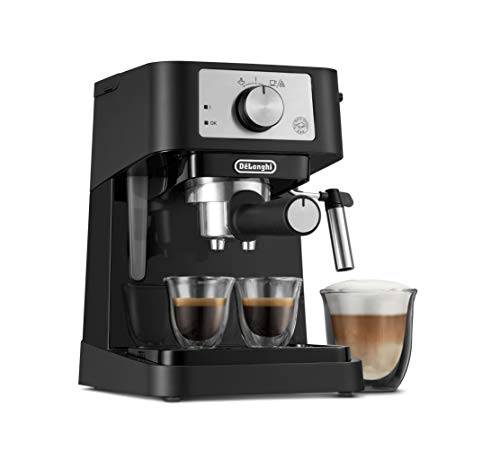
- 15-bar pressure and manual dial control
- Manual steam wand for milk texturing
- Includes single- and double-shot filters
Best For: Beginners learning hands-on espresso preparation
Best Larger Reservoir
CASABREWS 3700 Essential Espresso Machine

- 43.9-ounce removable water tank
- 20-bar pump with 1350-watt heating system
- Steam wand for microfoam and latte art
Best For: Frequent drinkers who want fewer water-tank refills
Best All-Rounder
AMZCHEF 20-Bar Compact Espresso Machine

- 20-bar pump with PID temperature control
- Fast 30-second heating and rotating steam frother
- Removable 50-ounce water tank
Best For: Versatile home espresso and milk drinks
Best for Temperature Monitoring
Neretva 20-Bar Compact Espresso Machine

- Temperature display for brewing and steaming
- 20-bar extraction with low-pressure pre-infusion
- 1.3-liter removable tank and cup warmer
Best For: Controlled brewing and hands-on espresso making
Best Budget-Style Starter
HBN 3.5-Bar Compact Espresso Machine

- 2-to-4-cup design for small spaces
- Simple one-knob control with safety indicators
- Steam wand and stainless steel components
Best For: Beginners and occasional espresso drinkers
Best Budget Pick
SHARDOR 3.5 Bar Compact Espresso Maker
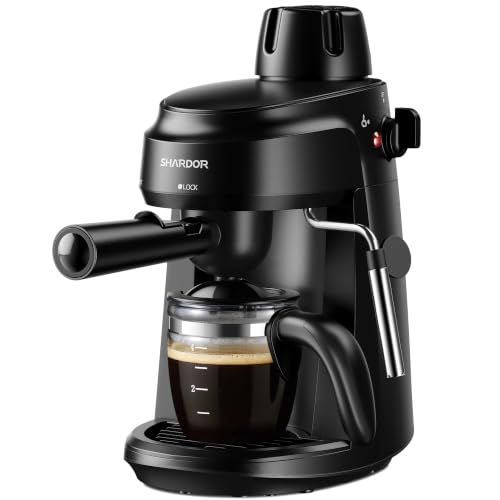
- Lightweight, space-saving design
- Simple one-knob operation
- Steam wand for milk drinks
Best For: Beginners and casual coffee drinkers with limited counter space
Best for Control
Gevi 20 Bar Compact Espresso Machine

- 20-bar pump with pressure gauge
- Pre-infusion and adjustable shot volume
- Stainless steel body with steam wand
Best For: Home baristas who want more brewing control in a compact footprint
Best for Fast Heating
20 Bar Compact Espresso Machine with Frother

- Preheats in about 20 seconds
- 20-bar pump with pressure gauge
- Narrow stainless steel countertop design
Best For: Busy users who want quick warm-up and milk-drink capability
Best Pressure Control – CASABREWS CM5418 Compact Espresso Machine
The CASABREWS CM5418 is a practical choice among compact espresso machines for home or office use. Its 20-bar pump, built-in pressure gauge, and 1350-watt boiler support adjustable espresso preparation, while the steam wand handles milk for lattes, cappuccinos, and macchiatos.
Best For: Home baristas who want pressure feedback and manual milk frothing in a compact stainless steel machine.
Pros:
- Built-in pressure gauge helps guide extraction adjustments.
- Powerful steam wand can create creamy microfoam.
- Detachable 34-ounce water tank supports multiple cups and easier refilling.
- Includes single- and double-shot filters, portafilter, and tamper with spoon.
Cons:
- Requires a cooldown period after frothing milk before brewing again.
- Manual controls and pressure adjustments may require practice.
This model offers useful control in a small footprint, particularly for shoppers who want to learn espresso and milk texturing rather than rely on fully automatic operation.
Best Four-Cup Value – IMUSA 4 Cup Electric Espresso Maker
The IMUSA 4 Cup Electric Espresso Cappuccino Coffee Maker is a straightforward option among compact espresso machines for brewing several servings at once. Its four-cup capacity, permanent filter basket, and milk frother make it suited to everyday espresso and cappuccino preparation.
Best For: Cuban coffee fans, households serving multiple people, and shoppers seeking a simple four-cup espresso maker.
Pros:
- Four-cup capacity is convenient for multiple servings.
- Milk frother supports cappuccinos and lattes.
- Removable drip tray and permanent filter basket simplify cleanup.
- Compact dimensions and heat-resistant exterior suit countertop use.
Cons:
- Its 800-watt design is less powerful than some machines in this roundup.
- Permanent-filter operation offers less filter flexibility than models with separate single- and double-shot baskets.
Choose the IMUSA when serving size and uncomplicated operation matter more than advanced extraction controls or extensive manual customization.
Best Manual Starter – De'Longhi Stilosa Compact Espresso Machine
The De’Longhi Stilosa is a compact espresso machine for shoppers who prefer hands-on brewing. Its manual dial, 15-bar pressure system, reusable filters, and stainless steel boiler support espresso preparation, while the manual steam wand lets you texture milk for lattes and cappuccinos.
Best For: Beginners who want a manual machine with both single- and double-shot brewing options.
Pros:
- Includes single- and double-shot filters plus a measuring scoop/tamper.
- Manual steam wand supports milk texturing for lattes and cappuccinos.
- Stainless steel boiler is designed for long-term use.
- Removable 1,000-milliliter tank and auto shut-off add convenience.
Cons:
- Manual operation requires more involvement than an automatic espresso maker.
- Its 14.17-inch height may need more vertical counter clearance than some compact models.
The Stilosa is a balanced entry point for learning the basic espresso workflow, especially if you value a durable boiler and manual milk frothing over one-touch convenience.
Best Larger Reservoir – CASABREWS 3700 Essential Espresso Machine
The CASABREWS 3700 Essential combines a compact footprint with a larger 43.9-ounce removable water tank. As one of these compact espresso machines, it offers a 20-bar pump, 1350-watt heating system, and steam wand for preparing espresso drinks at home or in the office.
Best For: Frequent latte and espresso drinkers who want fewer refills while keeping a compact stainless steel setup.
Pros:
- 43.9-ounce removable tank supports multiple cups between refills.
- 20-bar pump and 1350-watt heating system support espresso extraction.
- Steam wand creates creamy microfoam for lattes, cappuccinos, and macchiatos.
- Removable drip tray makes cleaning easier.
Cons:
- Requires a first-use cycle before brewing.
- Manual steaming and semi-automatic brewing involve a learning curve.
The 3700 Essential is the stronger fit when reservoir capacity is a priority. It retains the hands-on features of a compact semi-automatic machine while reducing interruption during multiple-cup sessions.
Best All-Rounder – AMZCHEF 20-Bar Compact Espresso Machine
For shoppers comparing compact espresso machines, the AMZCHEF combines a 20-bar pressure system, fast 30-second heating, and a rotating steam frother in a space-saving design. Its button controls and customizable extraction time make it approachable for everyday espresso, lattes, and cappuccinos.
Best For: Home coffee drinkers who want versatile espresso and milk drinks without a bulky machine.
Pros:
- 20-bar Italian pump and PID temperature control support consistent extraction.
- 1350W heating system preheats in about 30 seconds and warms cups.
- 360-degree stainless steel steam system supports lattes and cappuccinos.
- Removable 50-ounce water tank reduces frequent refills.
Cons:
- Uses ground coffee rather than built-in bean grinding.
- Semi-automatic operation requires some hands-on preparation.
- Plastic construction may feel less premium than an all-metal machine.
The AMZCHEF is a well-balanced choice among compact espresso machines, offering strong pressure, precise temperature management, and useful milk-frothing capability. It is especially practical for households that make several types of coffee drinks throughout the day.
Best for Temperature Monitoring – Neretva 20-Bar Compact Espresso Machine
The Neretva is one of the more feature-focused compact espresso machines, pairing 20-bar extraction with a temperature display and pre-infusion function. Its stainless steel build, 1.3-liter removable tank, and steam wand support espresso-based drinks while keeping the footprint space-conscious.
Best For: Beginners and enthusiasts who want visible temperature information and more controlled extraction.
Pros:
- 20-bar system and 1350W boiler are designed for espresso, lattes, and cappuccinos.
- Temperature monitoring displays precise readings for brewing and steaming.
- Low-pressure pre-infusion helps reduce air bubbles and promote even flavor extraction.
- Includes a removable 1.3-liter tank, cup warmer, and single- or double-cup options.
Cons:
- Its listed dimensions may require more counter depth and width than some compact models.
- Manual steaming and semi-automatic controls involve a learning curve.
- Only ground coffee is supported.
The Neretva stands out when temperature visibility and pre-infusion matter more than the simplest possible controls. It offers a comparatively substantial feature set for a compact machine, though users should confirm the available counter space before buying.
Best Budget-Style Starter – HBN 3.5-Bar Compact Espresso Machine
The HBN takes a simpler approach to compact espresso machines, using an 800W system, one-knob control, and a carafe designed to make two to four cups. Its built-in steam wand adds cappuccino and latte capability, while the stainless steel components and washable drip tray support straightforward daily use.
Best For: Beginners, dorms, offices, and small households making a few coffee drinks at a time.
Pros:
- Compact 2-to-4-cup format suits personal routines and small groups.
- One-knob operation and safety indicators are beginner-friendly.
- Steam wand can produce micro-foam in about 40 seconds.
- Stainless steel construction, removable funnel, and washable drip tray simplify upkeep.
Cons:
- Its 3.5-bar pressure is lower than the 20-bar systems in the other listed machines.
- The 240 ml capacity is limited for repeated brewing.
- The machine requires medium-coarse ground coffee for recommended water flow.
The HBN is a sensible entry point for shoppers who value simple controls and modest serving sizes over higher-pressure extraction. It is less suited to users who want a larger tank or more advanced temperature and brewing adjustments.
Best Budget Pick – SHARDOR 3.5 Bar Compact Espresso Maker
If you want compact espresso machines for occasional lattes, cappuccinos, or straightforward espresso-style drinks, the SHARDOR is a practical, lightweight option. Its one-knob control and 800W heating system make it approachable for beginners, while the small footprint suits dorms, apartments, offices, and RVs.
Best For: Beginners and casual coffee drinkers who prioritize a low price, simple controls, and minimal counter space.
Pros:
- Compact 3.45-pound design fits small kitchens, offices, dorms, and RVs.
- Simple one-knob operation handles brewing, frothing, and powering off.
- Steam wand supports lattes, cappuccinos, and other milk-based drinks.
- 800W system brews up to four cups in about four minutes.
Cons:
- Its 3.5-bar output is aimed more at casual use than high-pressure espresso preparation.
- It uses coarse coffee grounds rather than a pod system.
- The glass carafe and plastic housing may feel less premium than an all-metal machine.
The SHARDOR emphasizes simplicity and portability over advanced control. It is a sensible choice when compact dimensions, easy operation, and basic milk frothing matter more than extensive brewing adjustments.
Best for Control – Gevi 20 Bar Compact Espresso Machine
The Gevi is one of the more feature-rich compact espresso machines for home or office use. A 20-bar pump, pressure gauge, pre-infusion, adjustable shot volume, and NTC temperature control give users more ways to refine espresso-based drinks without moving to a larger machine.
Best For: Home baristas who want compact dimensions with pressure feedback, adjustable shot volume, and a capable steam system.
Pros:
- 20-bar pump, pressure gauge, and pre-infusion support a more controlled brewing process.
- Powerful steam wand creates microfoam for lattes and cappuccinos.
- Stainless steel housing offers a durable, modern appearance.
- Removable water tank, cup warmer, and hot-water function add everyday versatility.
Cons:
- At 8.6 pounds, it is notably heavier than the SHARDOR.
- The semi-automatic process requires more user involvement than a one-knob machine.
- Its 12.3-inch depth may need more front-to-back counter space.
Gevi balances a relatively narrow 5.5-inch width with useful café-style controls. It is a stronger fit for enthusiasts who want to experiment with shots and milk drinks while keeping the machine compact.
Best for Fast Heating – 20 Bar Compact Espresso Machine with Frother
This stainless steel model is designed for shoppers comparing compact espresso machines that can keep up with busy mornings. Its 1450W rapid-heating system reaches brewing and steaming temperature in about 20 seconds, while the pressure gauge, steam wand, and removable 34-ounce tank support everyday espresso and milk drinks.
Best For: Busy home or office users who want fast warm-up, a narrow countertop profile, and easy tank and drip-tray removal.
Pros:
- 1450W heating system preheats in approximately 20 seconds.
- 20-bar pump and visible pressure gauge support consistent brewing.
- Powerful steam wand is designed for silky microfoam and latte art.
- Compact 5.3-inch-wide profile and removable 34-ounce water tank suit small counters.
Cons:
- The semi-automatic design requires ground coffee and hands-on preparation.
- The machine must cool after frothing before brewing again, according to the operating guidance.
- Its 12.2-inch depth may still require careful counter placement.
With the fastest stated warm-up time in this group and a narrow footprint, this machine is particularly convenient for rushed routines. The required cooldown between frothing and brewing is the main workflow consideration.
How We Picked the Best Compact Espresso Machines
We compared these machines by looking at the features that matter most in a small home setup: overall footprint, stated pump or steam pressure, water-tank capacity, portafilter and cup compatibility, milk-frothing design, controls, and ease of cleaning. We also considered whether each machine is better suited to occasional espresso, milk-based drinks, or repeated daily use.
Pressure ratings are not the only measure of espresso quality. Grind size, coffee dose, tamping, water temperature, and freshness have a major effect on the cup. A compact machine with straightforward controls may be a better fit than a feature-heavy model that is difficult to dial in.
Quick Comparison
- Most space-conscious: Look for a narrow body, accessible controls, and a water tank that can be removed without moving the machine.
- Best for milk drinks: Choose a model with a dedicated steam wand and enough clearance for a small pitcher.
- Best for convenience: Prioritize a removable tank, simple one-touch controls, and dishwasher-safe or easy-to-rinse components.
- Best for occasional use: A basic steam-driven machine can be affordable and compact, though it generally offers less brewing control.
- Best for espresso experimentation: A pump machine with a portafilter gives you more control over dose, grind, and extraction.
Key Buying Factors for Compact Espresso Machines
Counter Space and Access
Measure width, depth, and height before buying, including room above the machine for filling the tank or operating the steam wand. Front-access controls and a removable water reservoir are especially useful under cabinets.
Pressure and Brewing Style
Many models advertise 20-bar pumps, while steam-driven machines may list lower pressure. Higher advertised pressure does not automatically mean better espresso; consistent water delivery and usable controls matter more. Confirm whether the machine uses a pump or steam brewing system.
Milk Frothing
A manual steam wand offers greater control over foam texture but requires practice. For occasional cappuccinos, that learning curve may be worthwhile. Check the wand’s position and whether the drip tray accommodates a frothing pitcher.
Capacity and Cleanup
A larger tank reduces refills but adds bulk. For one or two drinks at a time, a smaller removable tank may be the better compromise. Rinse the portafilter, purge the wand after every use, and follow the manufacturer’s descaling schedule.
Who Should Buy Which Compact Espresso Machines?
Choose a simple steam-driven model if you want an inexpensive machine for occasional cappuccinos and do not need café-style extraction control. Choose a compact pump machine if espresso quality and repeatability are higher priorities. Choose a stainless-steel or larger-capacity option if the machine will serve multiple people each morning and you want a sturdier countertop presence.
Before ordering, verify the machine’s dimensions, included accessories, electrical requirements, warranty, and current user instructions. The best Compact Espresso Machines are the ones that fit your counter and your routine closely enough that you will use them every day.