The best mini refrigerators make it easier to keep drinks, snacks, and everyday essentials cold when a full-size refrigerator is impractical. This roundup compares compact models with freezers, beverage-focused designs, glass doors, and space-saving features.
Whether you need a dorm-room refrigerator, office drink cooler, or bedroom snack station, use the guide below to match capacity, organization, energy use, and convenience features to your space.
Best 10 Mini Refrigerators Picks for 2026
Best Compact Freezer Pick
Upstreman 3.2 Cu.Ft Mini Fridge

- 3.2 cu. ft. capacity with a 0.3 cu. ft. freezer
- Quiet 38 dB operation and Energy Star certified
- Reversible door and adjustable glass shelves
Best For: Dorms, bedrooms, offices, and apartments needing flexible chilled storage
Best Spacious Option
Frigidaire 4.5 Cu.Ft Compact Refrigerator
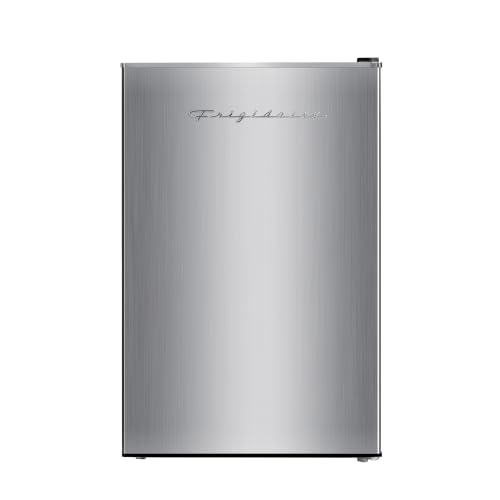
- Roomy 4.5 cu. ft. interior
- 2-liter door basket, can dispenser, and chiller compartment
- Stainless steel door with reversible opening
Best For: Apartments, offices, dorms, and entertaining areas needing more fridge space
Best Dedicated Freezer Space

- 0.92 cu. ft. freezer for substantial frozen storage
- Separate refrigerator and freezer temperature ranges
- LED light, removable shelves, and reversible door
Best For: Dorms and apartments where freezer capacity is a priority
Best Beverage Refrigerator

- Stores up to 130 cans in 3.2 cu. ft.
- Digital temperature control from 37°F to 61°F
- Glass door, five removable shelves, and 36 dB operation
Best For: Home bars, offices, kitchens, and drink-focused entertainment areas
Best Balanced Mini Fridge
3.2 Cu. Ft. Fridge with Freezer

- 3.2 cu. ft. capacity with a compact top freezer
- Quiet operation below 37 dB
- Reversible door and adjustable storage
Best For: Dorms, bedrooms, offices, and everyday food storage
Best Beverage Mini Fridge

- Holds up to 126 cans
- Digital 34°F–64°F temperature control
- Four removable shelves and a glass door
Best For: Home bars, offices, and dedicated beverage storage
Best Two-Door Mini Fridge
Feelfunn 3.2 Cu. Ft. Two-Door Fridge

- Separate 0.96-cu.-ft. freezer compartment
- Three thermostat levels for targeted cooling
- Quiet operation rated at 38 dB or less
Best For: Small spaces needing substantial frozen-food storage
Best Beverage Mini Refrigerator
Feelfunn 18L Compressor Cooler

- Compact 0.6-cu.-ft. beverage-focused design
- 40°F–61°F compressor cooling range
- Quiet operation rated at 38 dB or less
Best For: Desks, countertops, dorms, bedrooms, and home bars
Best Mini Refrigerator With Freezer

- 3.2 cu. ft. total capacity with separate freezer
- Reversible door suits varied room layouts
- Adjustable shelves and door bins organize food
Best For: Bedrooms, dorms, offices, and apartments needing freezer space
Best Glass-Shelf Mini Refrigerator

- 3.2 cu. ft. capacity with separate freezer
- Glass shelves support organized storage
- Automatic defrost and mechanical temperature control
Best For: Homes, dorms, and offices storing snacks, drinks, and frozen foods
Best Compact Freezer Pick – Upstreman 3.2 Cu.Ft Mini Fridge
The Upstreman BR321 is one of the more balanced mini refrigerators for dorms, bedrooms, offices, and apartments. Its 3.2-cubic-foot capacity combines a 2.9-cubic-foot refrigerator compartment with a 0.3-cubic-foot freezer while maintaining a relatively compact footprint.
Best For: Shoppers who want a quiet, energy-efficient mini refrigerator with a small freezer and flexible placement options.
Pros:
- Compact 3.2-cubic-foot design with separate refrigerator and freezer sections
- Five temperature settings from 32°F to 50°F
- Quiet 38 dB operation and Energy Star certification
- Reversible door, adjustable glass shelves, crisper drawer, and leveling feet
Cons:
- The 0.3-cubic-foot freezer is compact
- Manual defrost requires periodic maintenance
- It is not intended for storing ice cream or ice cubes
With useful organization features and a reversible door, this Upstreman model is a practical all-around choice. Its small freezer is best treated as supplemental storage rather than a full-size freezer replacement.
Best Spacious Option – Frigidaire 4.5 Cu.Ft Compact Refrigerator
The Frigidaire Platinum Series stands out among mini refrigerators for its 4.5-cubic-foot capacity and organized storage layout. Its flush-back design helps it fit neatly in smaller rooms, while the stainless steel door adds a polished look.
Best For: Buyers who prioritize extra refrigerator space, bottle storage, and a modern stainless steel finish.
Pros:
- Largest listed capacity at 4.5 cubic feet
- Includes glass shelves, a 2-liter door basket, can dispenser, and chiller compartment
- Reversible door and leveling legs support flexible placement
- Energy Star certified with a one-year warranty
Cons:
- The internal freezer is only 0.3 cubic feet
- Manual defrost requires upkeep
- Its 21-inch depth and 22-inch width may need more room than smaller models
This is a strong choice when refrigerator capacity matters more than freezer space. The can dispenser and large door basket are particularly useful for drinks and everyday snacks.
Best Dedicated Freezer Space – Midea 3.1 Cu.Ft Mini Fridge
The Midea WHD-113FSL is a versatile option among mini refrigerators, pairing a compact 3.1-cubic-foot footprint with a relatively generous 0.92-cubic-foot freezer. It also includes separate temperature ranges for the refrigerator and freezer compartments.
Best For: Dorm and apartment users who want more freezer capacity without moving up to a full-size refrigerator.
Pros:
- 0.92-cubic-foot freezer provides more dedicated frozen-food space
- Separate cooling ranges for the refrigerator and freezer sections
- Reversible door, removable glass shelves, crisper drawer, and interior LED light
- Energy Star certified with multi-air-flow cooling
Cons:
- Only 2.16 cubic feet is allocated to fresh-food storage
- Manual defrost requires periodic maintenance
- Its 270 kWh annual energy-use figure is higher than some smaller-capacity alternatives listed
The Midea is the better fit for shoppers who regularly keep frozen items on hand. Its removable shelving and bottle rack help make the smaller fresh-food section more adaptable.
Best Beverage Refrigerator – EUHOMY 130-Can Mini Fridge
The EUHOMY BR013-110 takes a beverage-focused approach to mini refrigerators. Its 3.2-cubic-foot, freezerless interior holds up to 130 standard cans, with five removable shelves and digital temperature control from 37°F to 61°F.
Best For: Home bars, offices, kitchens, and entertainment spaces that need organized drink storage and a display-style glass door.
Pros:
- Holds up to 130 standard cans in a 3.2-cubic-foot interior
- Five removable shelves can be arranged across five slots
- Digital controls and LED display make temperature adjustment straightforward
- UV-blocking glass door, reversible opening, quiet 36 dB operation, and frost-free design
Cons:
- Freezerless design cannot store frozen foods
- Temperature range begins at 37°F rather than extending to the lower refrigerator setting of some models
- The unit should stand upright for 24 hours before initial use
For drinks, this EUHOMY offers more specialized organization than a general-purpose mini refrigerator. The glass door and digital display also make it suited to spaces where presentation matters.
Best Balanced Mini Fridge – 3.2 Cu. Ft. Fridge with Freezer
For shoppers comparing mini refrigerators for a dorm, bedroom, office, or kitchen, this 3.2-cubic-foot model combines chilled storage with a compact top freezer. Its adjustable organization features and reversible door make it practical for varied room layouts.
Best For: Everyday food and beverage storage where low noise, flexible placement, and a small freezer are important.
Pros:
- Includes a 0.2-cubic-foot freezer, two removable glass shelves, and a crisper drawer.
- Six-level thermostat, LED interior light, reversible door, and leveling legs support flexible use.
- Reported operation below 37 dB and energy use of about 0.55 kWh per day.
- One-touch defrosting and a removable door seal simplify maintenance.
Cons:
- The freezer compartment is relatively small at 0.2 cubic feet.
- Its 3.2-cubic-foot capacity may not suit larger households or bulk storage.
This is a well-rounded choice among mini refrigerators when you want a quiet, organized main compartment without giving up a dedicated freezer. The compact footprint and reversible door are especially useful in space-constrained rooms.
Best Beverage Mini Fridge – 126-Can Drink Cooler
Among mini refrigerators designed for drinks, this freezerless 3.2-cubic-foot beverage cooler stands out for its stated 126-can capacity. The glass door, four removable shelves, and digital temperature control make it easy to organize and monitor beverages.
Best For: Beverage storage in homes, offices, entertainment spaces, or other areas where a freezer is unnecessary.
Pros:
- Designed to hold up to 126 cans with four removable shelves.
- Digital controls offer an adjustable 34°F–64°F temperature range.
- Tempered glass door with low-E film, high-seal gasket, and 360-degree air cooling support consistent chilling.
- Reversible hinge, adjustable feet, and soft interior LED lighting improve usability.
Cons:
- It is freezerless, so it cannot store frozen foods.
- Manual defrosting is listed in the product details.
- Its reported annual energy consumption is 289 kWh.
This model is a focused solution for shoppers who want one of the more beverage-oriented mini refrigerators rather than a general-purpose food fridge. Its wide temperature range and removable shelving provide useful flexibility for cans, bottles, soda, beer, or wine.
Best Two-Door Mini Fridge – Feelfunn 3.2 Cu. Ft. Two-Door Fridge
For shoppers seeking mini refrigerators with more capable frozen storage, this Feelfunn model uses separate fridge and freezer zones in a compact two-door design. It offers 2.24 cubic feet of refrigerator space and a 0.96-cubic-foot freezer while fitting a stated 2.44-square-foot footprint.
Best For: Dorms, bedrooms, offices, RVs, or garages where frozen food storage matters as much as refrigerated space.
Pros:
- Separate 2.24-cubic-foot refrigerator and 0.96-cubic-foot freezer compartments.
- Three thermostat levels support refrigerator temperatures from 32°F–50°F and freezer temperatures from 21.2°F to -0.4°F.
- Includes adjustable glass shelves, a crisper drawer, LED lighting, and reversible doors.
- Compressor is rated at 38 dB or less, with adjustable front legs for stability.
Cons:
- Listed energy use is 0.98 kWh per day, higher than the first product in this roundup.
- Manual defrosting is specified in the product details.
- The manufacturer recommends keeping it upright for 6–12 hours before plugging it in after transport.
This is the strongest fit here for users who regularly need a meaningful freezer compartment without moving up to a full-size refrigerator. Its separate doors and flexible interior storage make it particularly practical for personal food supplies in small living spaces.
Best Beverage Mini Refrigerator – Feelfunn 18L Compressor Cooler
The Feelfunn 18L is one of the more compact mini refrigerators for keeping drinks cold in an office, dorm, bedroom, gaming room, or home bar. Its compressor cooling system reaches 40°F–61°F, while the removable shelf accommodates different drink sizes.
Best For: Countertops, desks, under-desk spaces, and dedicated beverage storage.
Pros:
- Compact 0.6-cubic-foot design fits small spaces.
- Compressor cooling and 360° air circulation provide even chilling.
- Quiet operation is rated at 38 dB or less.
- Touch controls, temperature display, and interior LED improve usability.
Cons:
- Freezerless design is intended for beverages rather than frozen food.
- Manual defrosting is required.
- Capacity is limited compared with full-size mini refrigerators.
This Feelfunn model is a practical choice when your priority is chilled drinks in a small footprint. Choose it over a larger mini refrigerator if you do not need freezer space or extensive food storage.
Best Mini Refrigerator With Freezer – 3.2 Cu. Ft. Upright Fridge
This 3.2-cubic-foot mini refrigerator combines everyday chilled-food storage with a separate 0.35-cubic-foot freezer compartment. Its compact upright format suits bedrooms, dorms, offices, and apartments, while adjustable shelves and door bins help organize groceries and drinks.
Best For: Users who need both refrigerated and short-term frozen storage in a compact appliance.
Pros:
- Offers 3.2 cubic feet of total storage, including a dedicated freezer.
- Reversible door supports left- or right-opening installations.
- Adjustable shelves and door bins provide flexible organization.
- ETL-certified design operates on standard 115V/60Hz power.
Cons:
- Manual defrosting requires periodic maintenance.
- The freezer is relatively small and intended for ice and short-term frozen storage.
- At 32.7 inches tall, it needs more vertical space than compact beverage coolers.
With its larger capacity and separate freezer, this model is a versatile pick among mini refrigerators for meal storage and daily use. Its reversible door is especially useful when fitting the unit into a tight or fixed layout.
Best Glass-Shelf Mini Refrigerator – Igloo 3.2 Cu. Ft. Fridge
The Igloo 3.2-cubic-foot mini refrigerator provides room for snacks, drinks, and frozen foods in a compact single-door format. It uses compressor cooling, has adjustable mechanical temperature control, and includes glass shelves for organizing the refrigerator section.
Best For: Homes, dorms, and offices needing a straightforward mini refrigerator with separate freezer storage.
Pros:
- Spacious 3.2-cubic-foot capacity includes a separate freezer compartment.
- Glass shelves offer a stable, easy-to-clean storage surface.
- Adjustable mechanical thermostat provides simple temperature control.
- Automatic defrost reduces routine maintenance.
Cons:
- The freezer compartment is only 0.2 cubic feet.
- Door orientation is listed as left-facing rather than reversible.
- Annual energy consumption is listed at 304 kWh.
This Igloo model is a solid general-purpose option for shoppers who want more food storage than a beverage cooler provides. Its glass shelves and automatic defrost add convenience, while the compact footprint remains suitable for common living and workspace settings.
How We Picked These Mini Refrigerators
We selected these 10 Mini Refrigerators based on the features that matter most in compact cooling: usable capacity, freezer configuration, shelf flexibility, door storage, beverage organization, footprint, and intended setting. The lineup includes general-purpose refrigerators, two-door dorm models, and beverage coolers with glass doors and can-focused interiors.
Because compact refrigerators vary widely in design, we considered how each type fits common needs rather than treating capacity alone as the deciding factor. A drink cooler may hold more cans, while a small refrigerator with a freezer is usually more versatile for food and frozen items.
Quick Comparison
| Type | Best For | What to Look For |
|---|---|---|
| Mini fridge with freezer | Dorms, bedrooms, and offices | Separate freezer space, adjustable shelves, reversible door |
| Beverage refrigerator | Cans, bottles, and entertaining | Can capacity, glass door, temperature range, interior lighting |
| Single-door compact refrigerator | Simple everyday storage | Door bins, shelf layout, compact footprint |
| Two-door mini fridge | Food plus frozen storage | Freezer size, independent compartments, usable interior space |
Key Buying Factors for Mini Refrigerators
Capacity and Interior Layout
Advertised cubic footage does not tell the whole story. Check shelf dimensions, door-bin space, and whether the freezer occupies a significant portion of the interior. For one person, around 3 to 4.5 cubic feet may be sufficient for snacks, drinks, and basic groceries. Beverage models should be judged by can capacity and shelf spacing.
Freezer Type
Choose a freezer-equipped model if you need ice, frozen meals, or longer-term storage. A dedicated freezer compartment is more practical than a small chilling section, but it also reduces refrigerator space. Beverage-only models are better when cold drinks are the priority and frozen storage is unnecessary.
Size, Door Clearance, and Noise
Measure the available area, including ventilation clearance and room for the door to open. Confirm the door hinge direction if the refrigerator will sit beside a wall or desk. For bedrooms and offices, quieter operation is especially important; manufacturer specifications and customer feedback can help identify models suited to quiet spaces.
Energy Use and Convenience
Look for Energy Star certification where available, particularly if the refrigerator will run continuously. Adjustable shelves, leveling feet, interior lighting, a reversible door, and a clear temperature control can make a compact appliance much easier to use.
Who Should Buy Which Mini Refrigerators?
For Dorm Rooms and General Food Storage
Choose a compact refrigerator with a freezer, adjustable shelving, and door storage. Models around 3.1 to 3.2 cubic feet offer a practical balance of footprint and versatility.
For Offices, Garages, and Shared Spaces
A larger 4.5-cubic-foot model may be more useful when several people need access to drinks and lunches. Prioritize durable shelves, easy cleaning, and enough door clearance.
For Drinks and Entertaining
Select a beverage refrigerator with a glass door and can-focused capacity. These models provide better visibility and organization than traditional mini fridges, but they are typically not the best choice for frozen food.
For Bedrooms and Personal Use
A smaller beverage cooler or single-door mini fridge can reduce wasted space. Focus on quiet operation, a compact depth, and a temperature control that suits the items you plan to store.